

Which wall is best for a Buddha painting?
- Date: July 23, 2026
- By: Alex Brandt
A hand-painted Buddha painting is often more than just wall decoration. It is a work of art that brings peace, balance, and character to a room. The place where you hang it also has a significant impact on the appearance and harmony of your interior. Yet we are regularly asked: which wall is the best place to display a Buddha painting?
The right location not only determines how the painting looks, but also the atmosphere it creates within the room. Factors such as natural light, viewing angle, wall color, and the size of the wall all play an important role. The right placement allows the artwork to become a natural focal point within your interior.
In this blog, we explain which walls are most suitable for a Buddha painting and where you may want to choose a different location instead.
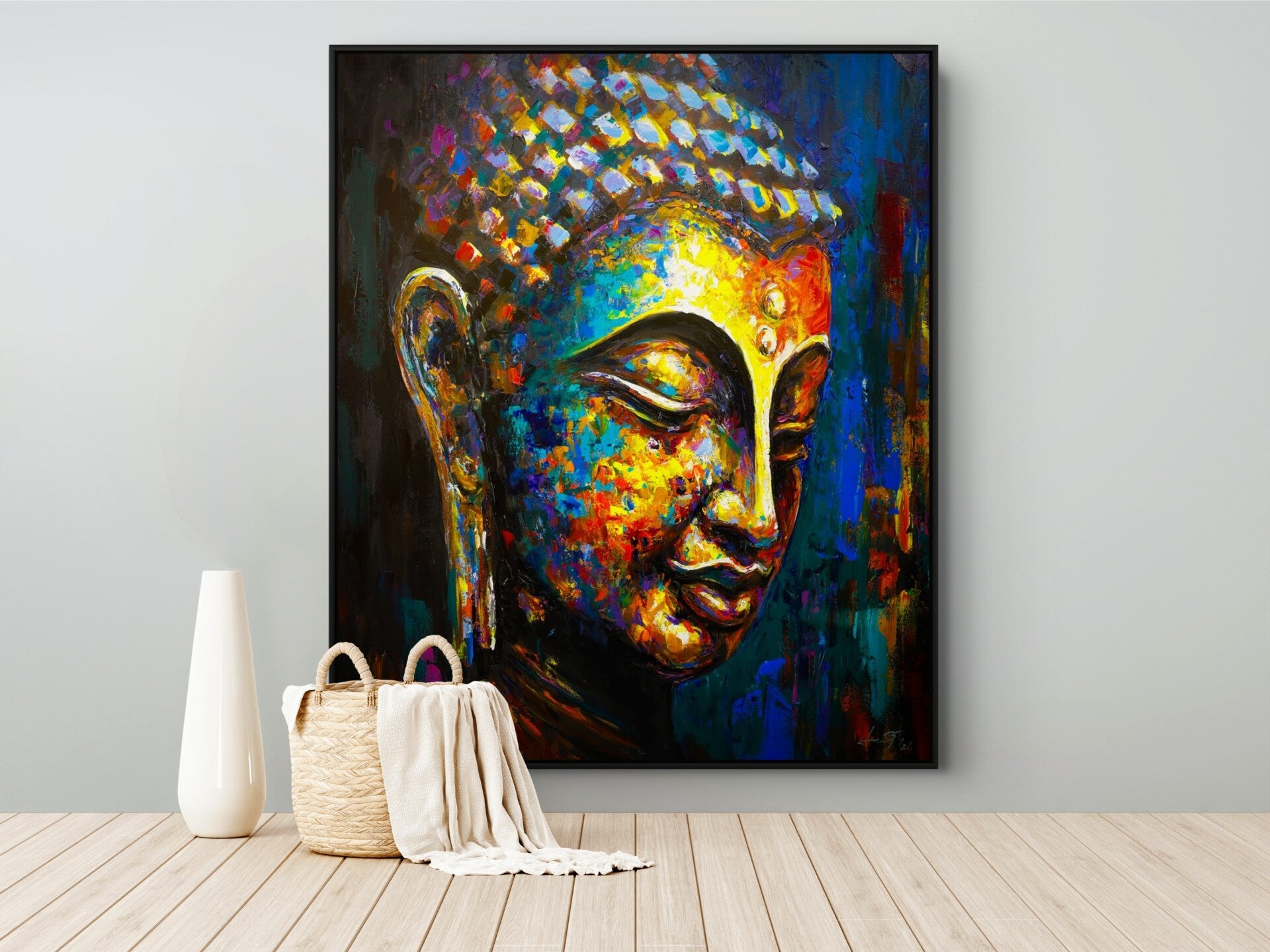
Choose a wall that immediately draws attention
The best place for a Buddha painting is often a wall that is immediately visible when you enter a room. This allows the artwork to naturally receive the attention it deserves and become an integral part of the interior.
Many people spend a great deal of time choosing a painting, only to hang it in a place where it is barely noticed. That is a shame, because a hand-painted work of art looks its best when it has a clear purpose within the room.
Consider the wall opposite the living room entrance, a prominent wall behind a sofa, or a calm wall in the hallway. When a painting is immediately visible, its colors, details, and presence instantly attract attention. As a result, it creates far more impact than when the artwork disappears among furniture or other decorative items.
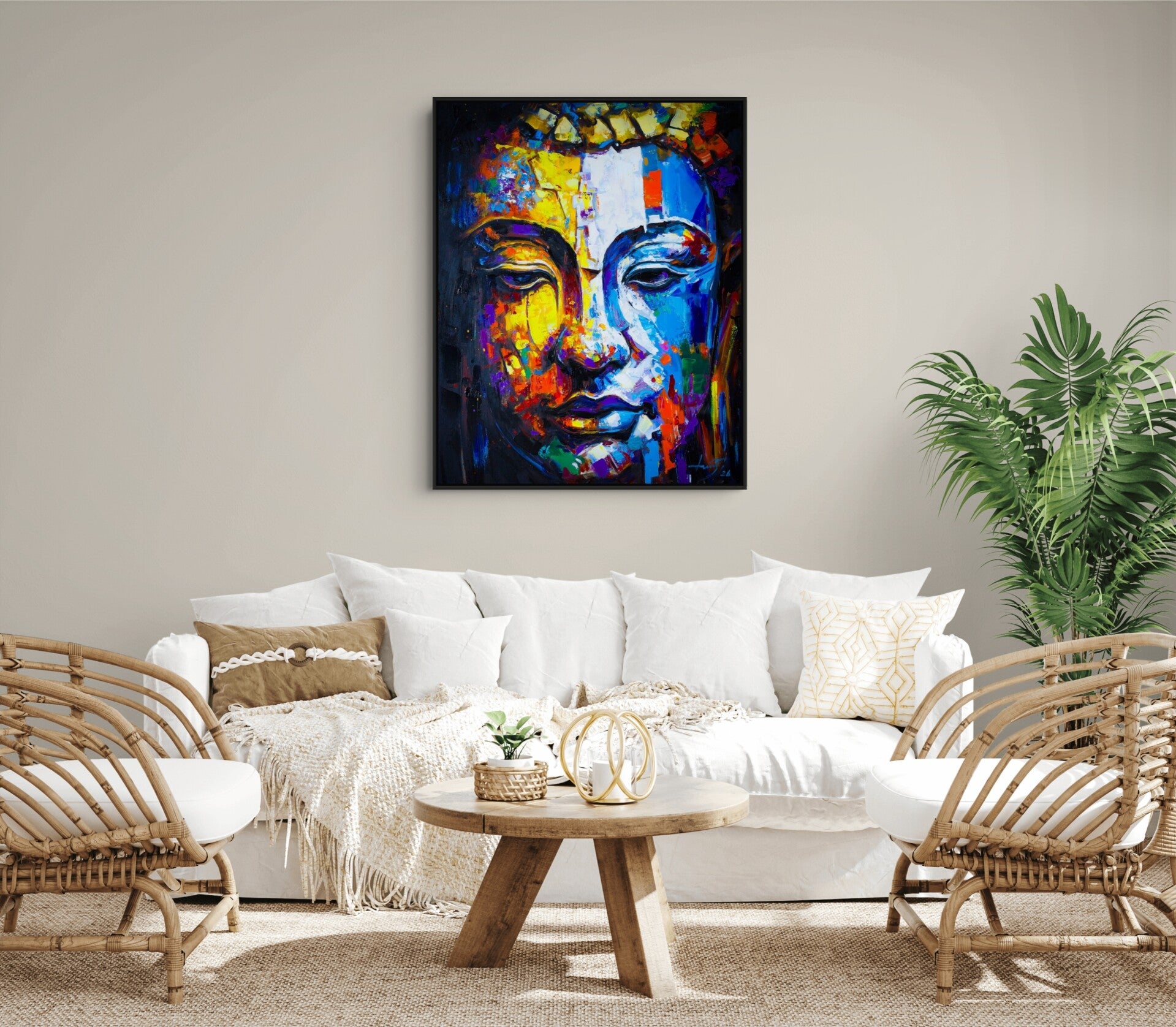
The living room is often the best choice
For many people, the living room is the most logical place for a Buddha painting in your home. After all, it is the room where most time is spent and where visitors are also able to admire the artwork.
A Buddha painting can serve as a central focal point in the living room. Larger paintings, in particular, often look their best here because living rooms usually offer more wall space than a bedroom or home office.
A popular location is above a sideboard, console table, or sofa. It is important that the painting has enough space around it. When a wall is already filled with shelves, photo frames, televisions, or other decorative items, the artwork becomes less noticeable. A clean, uncluttered wall allows the painting to stand out and fully showcase its beauty.
The meaning of a Buddha painting in your home
For many people, a Buddha painting in your home is much more than a decorative piece of art. The image of the Buddha is often associated with peace, wisdom, mindfulness, and inner balance. That is why many people choose to give a Buddha painting a prominent place within their interior.
You do not have to be a Buddhist to appreciate the symbolism of a Buddha painting. Many people see it as a daily reminder of peace, mindful living, and finding balance in a busy life. The serene presence of the Buddha can help create a relaxing atmosphere at home and offers a sense of calm within the living space.
In addition, every hand-painted Buddha painting has its own unique character. Some artworks mainly express serenity and tranquility, while others symbolize energy, strength, or positivity. By choosing a painting that matches the desired atmosphere of a room, a personal connection is created between the artwork and the space in which it is displayed.
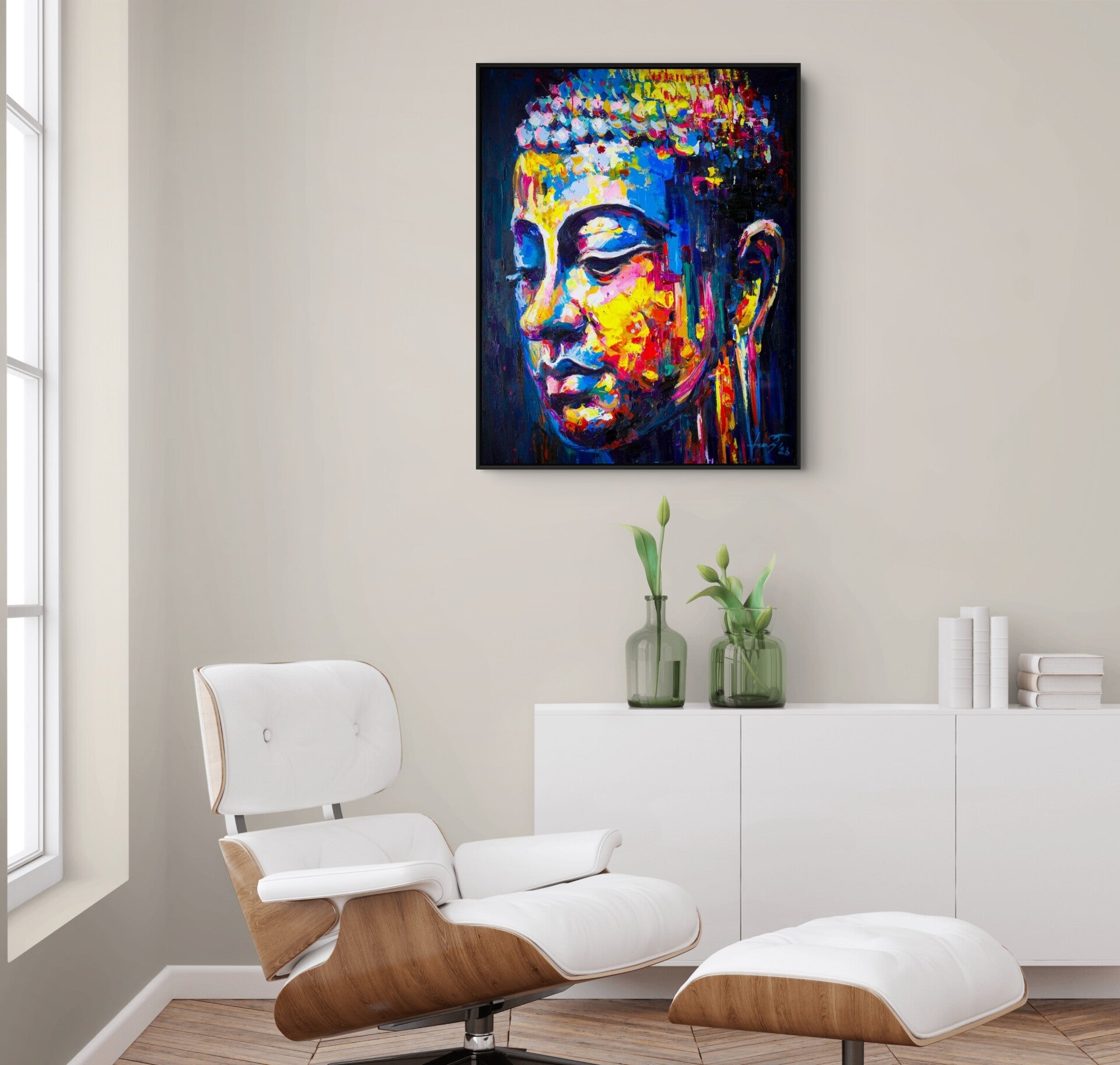
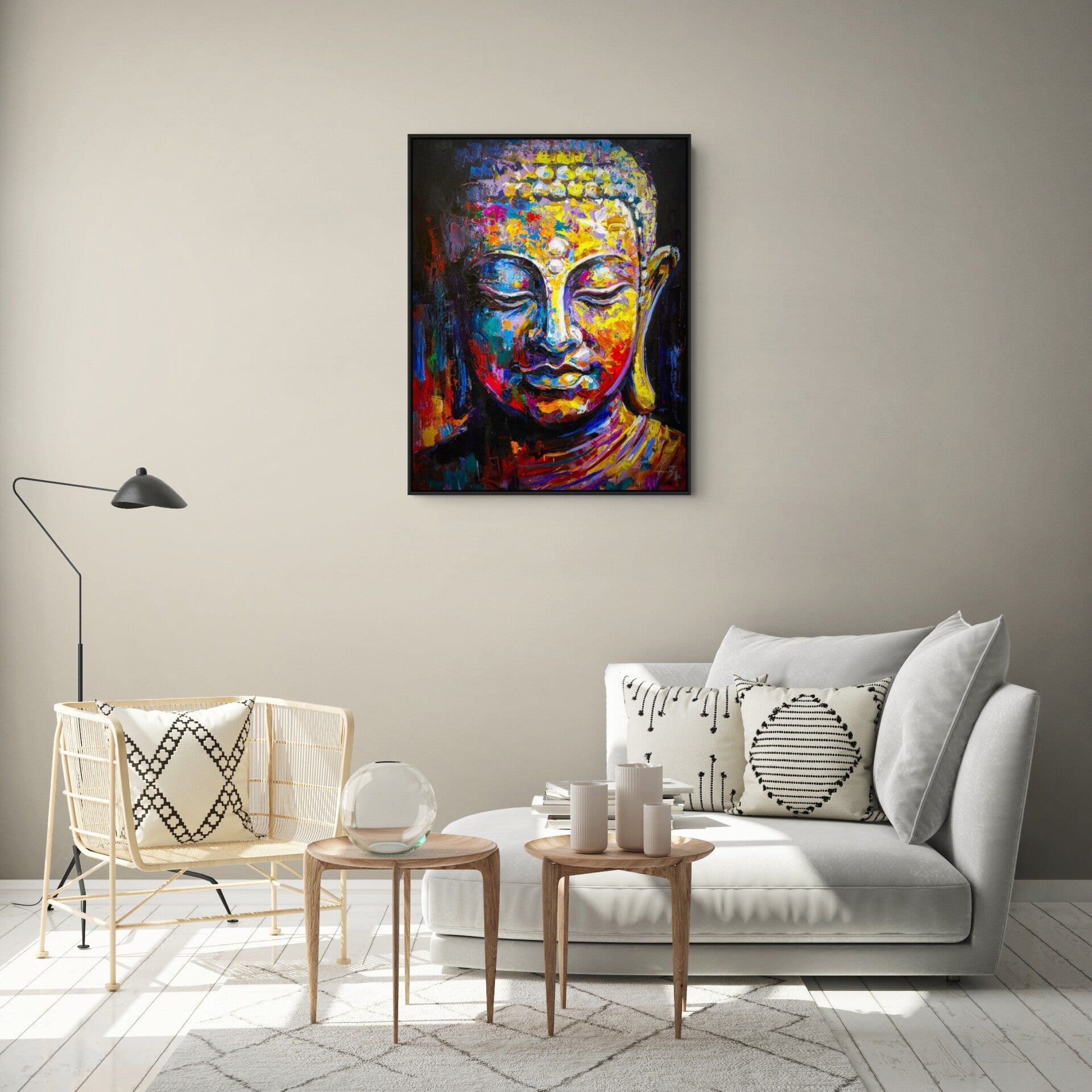
Pay close attention to the lighting
One of the most overlooked aspects of hanging artwork is the lighting on a painting. The right light can enhance the colors and details of a painting, while poor lighting can reduce its visual impact.
Natural daylight often provides the most beautiful color reproduction. At the same time, it is wise to avoid prolonged exposure to direct sunlight. If a painting is exposed to strong sunlight for several hours every day, the intensity of its colors may gradually fade over time.
Ideally, a painting should be displayed in a location with sufficient natural daylight without being exposed to direct sunlight throughout the day. In the evening, wall lighting or ambient lighting can help keep the artwork beautifully illuminated. A well-lit painting naturally attracts more attention and often becomes a stronger feature within the interior.
Choose the right size for the wall
A painting truly comes into its own when its size matches the available wall space. That is why it is important to consider not only the artwork itself, but also the wall on which it will be displayed.
A large Buddha painting can quickly appear overwhelming on a small wall. On the other hand, a smaller painting may get lost on a large empty wall. In both situations, part of the artwork's visual impact is diminished.
Try to find a good balance between the size of the painting and the surrounding space. A work of art does not have to fill the entire wall to make an impression. In fact, the most harmonious result is often achieved when there is plenty of open space around the painting. This gives the artwork both literally and visually the room to stand out.
Where should you avoid hanging a Buddha painting?
Although there are no strict rules for hanging a Buddha painting, there are certain locations that are less suitable than others.
Narrow sections of wall between doors or windows often do not provide enough space for a painting to be displayed properly. Dark corners with very little natural light are also usually not ideal. In these locations, the colors and details of the artwork are much less visible.
It is also advisable to avoid placing a painting where it has to compete with other eye-catching objects. A large television, a busy open shelving unit, or a wall filled with decorative items can easily draw attention away from the artwork. A special painting deserves a place where it is truly seen and where the eye is not constantly distracted by other elements in the room.
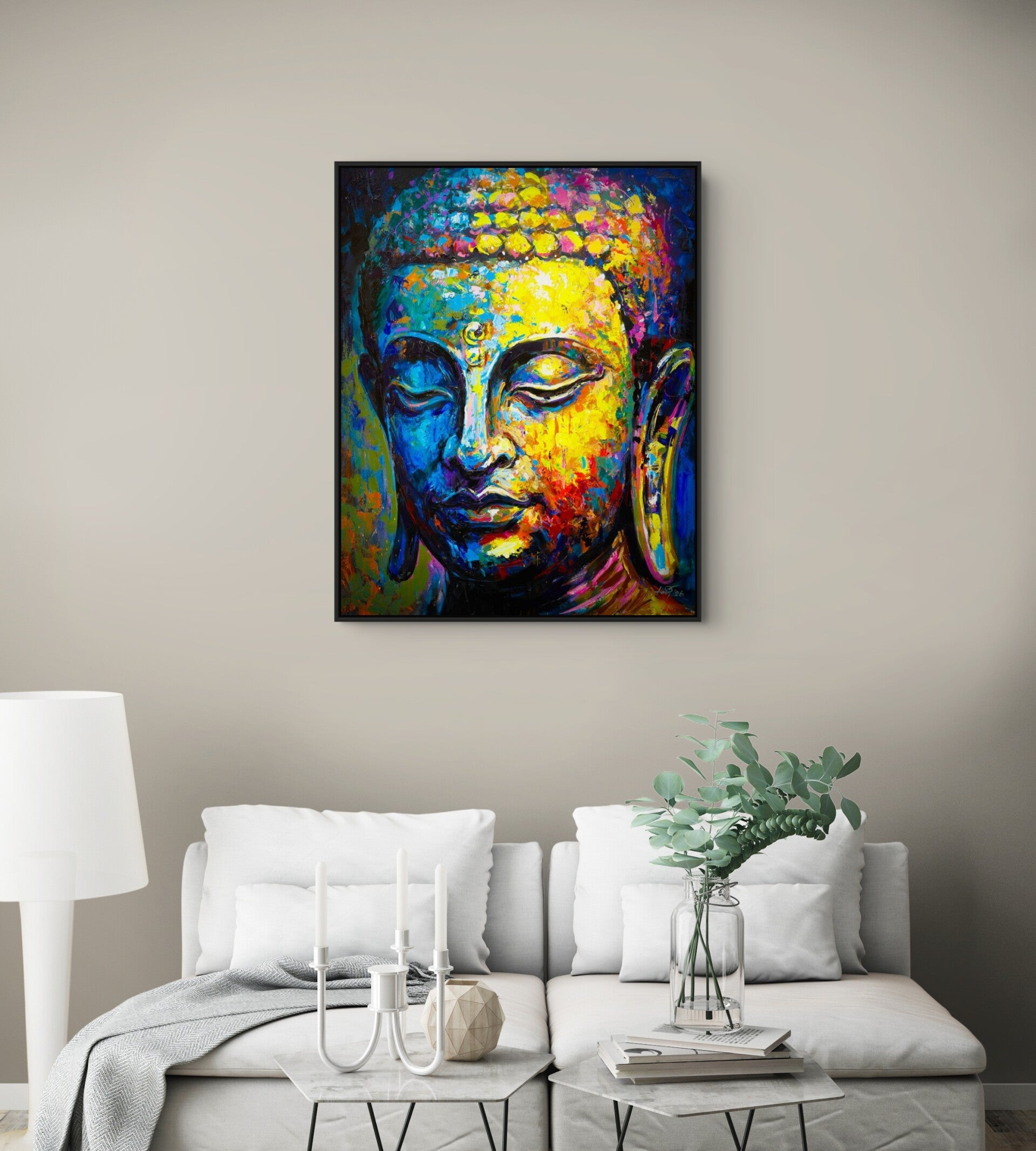
Looking for a hand-painted Buddha painting?
Discover the exclusive collection from Original Buddha Art featuring hand-painted Buddha paintings from Thailand. Every painting is a one-of-a-kind original work of art, officially imported, blessed by a Buddhist monk, and supplied with a professional Certificate of Authenticity (COA).
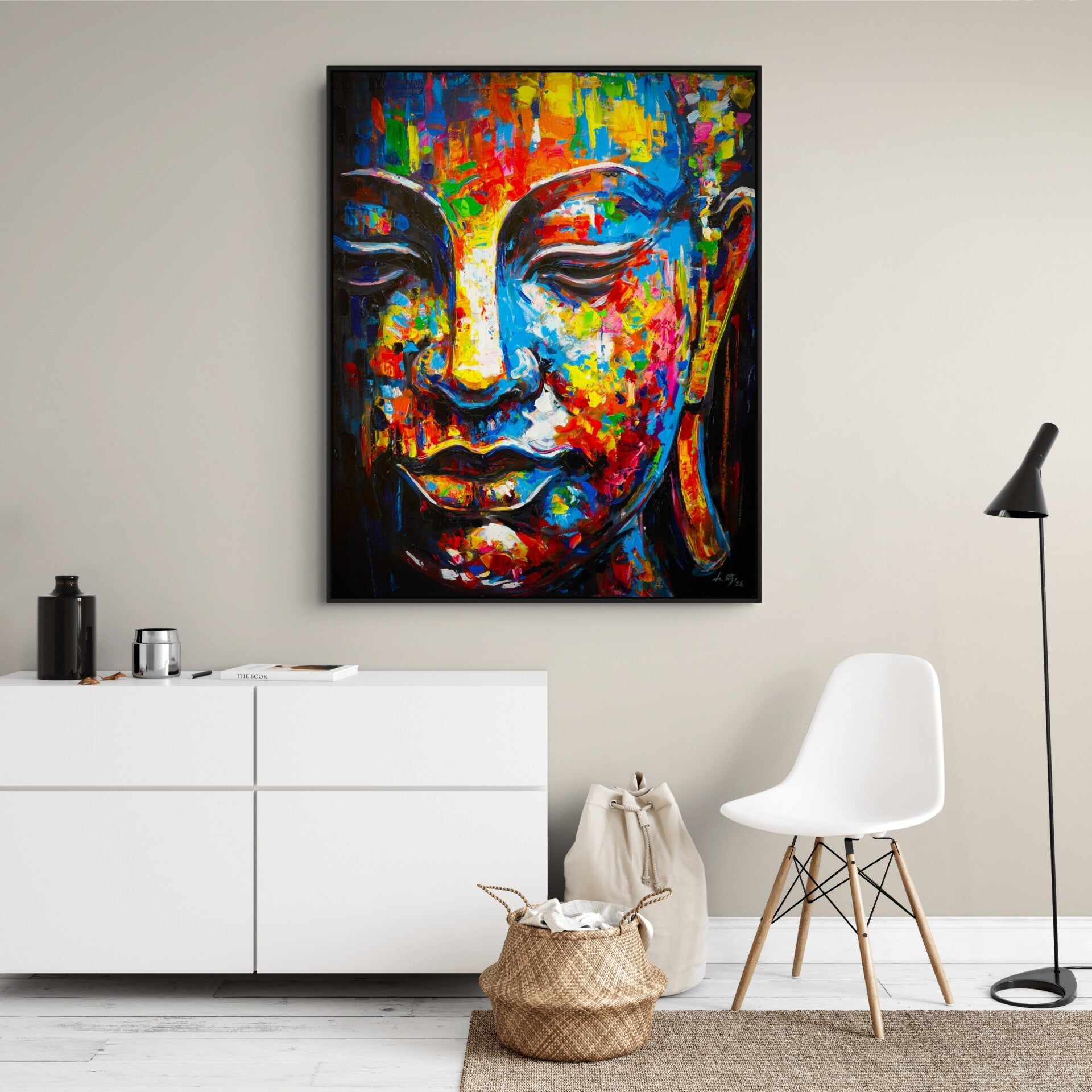
In the end, it is all about balance
The best place for a Buddha painting is not the same for everyone. The ideal location depends on the room, the interior design, and the personal preferences of its owner.
In most cases, however, a painting looks its best on a calm wall with plenty of space, good lighting, and a prominent position within the room. This allows the colors, details, and overall character of the artwork to be appreciated at their fullest.
There are also several beliefs and misconceptions surrounding Buddha paintings. For example, some people believe that a Buddha painting should only be given or received as a gift. In reality, there is no Buddhist rule stating that you must receive a Buddha painting as a gift or that you may only give one to someone else. Whether you buy a painting yourself or receive it as a present makes no difference.
The same applies to where the painting is displayed. Ultimately, it is not about strict rules, but about the way the artwork is appreciated and treated. A hand-painted Buddha painting looks its best in a place where it receives the attention it deserves, complements the atmosphere of the room, and is displayed with respect. This creates not only a beautiful focal point in your home, but also a timeless work of art that you can enjoy for many years to come.
Conclusion
The best place for a Buddha painting is usually a wall that is immediately visible, offers plenty of space, and benefits from good natural light. For this reason, the living room, bedroom, or home office are often excellent choices.
Pay attention to the proportions between the painting and the wall, avoid prolonged exposure to direct sunlight, and preferably choose one Buddha painting per room. This allows the artwork to receive the attention it deserves while creating a calm and harmonious atmosphere.
"A remarkable Buddha painting does not need the largest wall—it needs the right wall."
More blogs from Original Buddha Art

Meaning of Buddha paintings in your home
In this blog, you will read about the meaning of a Buddha painting and why Buddha art is often chosen to bring peace, balance, and harmony into an interior.

Can you buy a Buddha painting for yourself?
In this blog, you will learn where the idea comes from that you should receive a Buddha as a gift, and discover why you can also buy one yourself.

Buying a Buddha Painting as a Non-Buddhist
In this blog, you'll discover whether you can buy a Buddha painting as a non-Buddhist and why the symbolism of peace, balance, and positivity resonates worldwide.