

Buddha – life, enlightenment and wisdom
Buddha, originally Siddhartha Gautama, lived more than 2,500 years ago in what is now present-day Nepal and Northern India. He was a spiritual teacher who gave up his comfortable life as a prince in order to understand human suffering.
After years of meditation and self-inquiry, he attained enlightenment and became known as the Buddha — “the Awakened One”. His insights into consciousness, compassion, impermanence and inner freedom still form the heart of Buddhism today and continue to inspire millions of people around the world.
Buddha, monks and temples
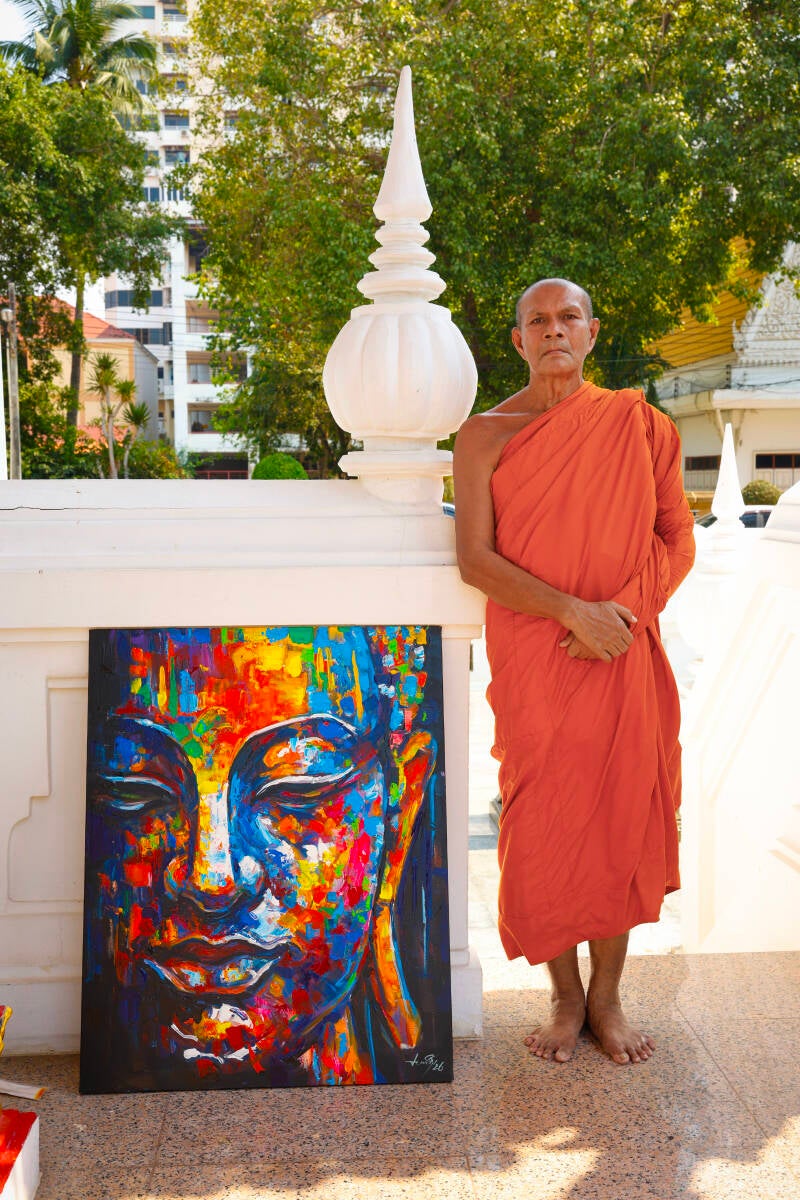
Within Buddhism, monks play an important role as guardians of the teachings of Buddha (the Dhamma). They devote their lives to study, meditation and following moral principles.
Temples — known in Thailand as wats — are spiritual centres where people gather for meditation, education, rituals and blessings. They form an essential part of daily life in many Buddhist communities.
A monk does not represent Buddha himself, but stands within the living tradition of his teachings. When a work of art is blessed, this is done with respect and intention — as the expression of good wishes for harmony, protection and prosperity.

Buddha and Thailand
In Thailand, Buddhism is deeply interwoven with culture, art and everyday life. Temples are not only religious buildings, but also places of community, reflection and connection.
Buddha statues and paintings are seen as expressions of respect and spiritual devotion. For many Thai people, Buddha symbolises a peaceful way of life, gratitude and the pursuit of balance between body and mind.
Blessing and meaning of our Buddha paintings
Our Buddha paintings are respectfully blessed by a monk from the temple Wat Chai Mongkhon in Chon Buri, Thailand.
In the Thai Buddhist tradition, a blessing represents the expression of good intentions and the wish for harmony, protection and prosperity. Many Thai people experience such a moment as inviting luck and positive energy into their home or workspace.
The blessing is not a religious obligation, but a symbolic gesture that connects the artwork to the spiritual tradition from which it originates.
View our collection
Have you been inspired? Then also explore our collection of unique, hand-painted Buddha paintings from Thailand.
Wat Chai Mongkhon
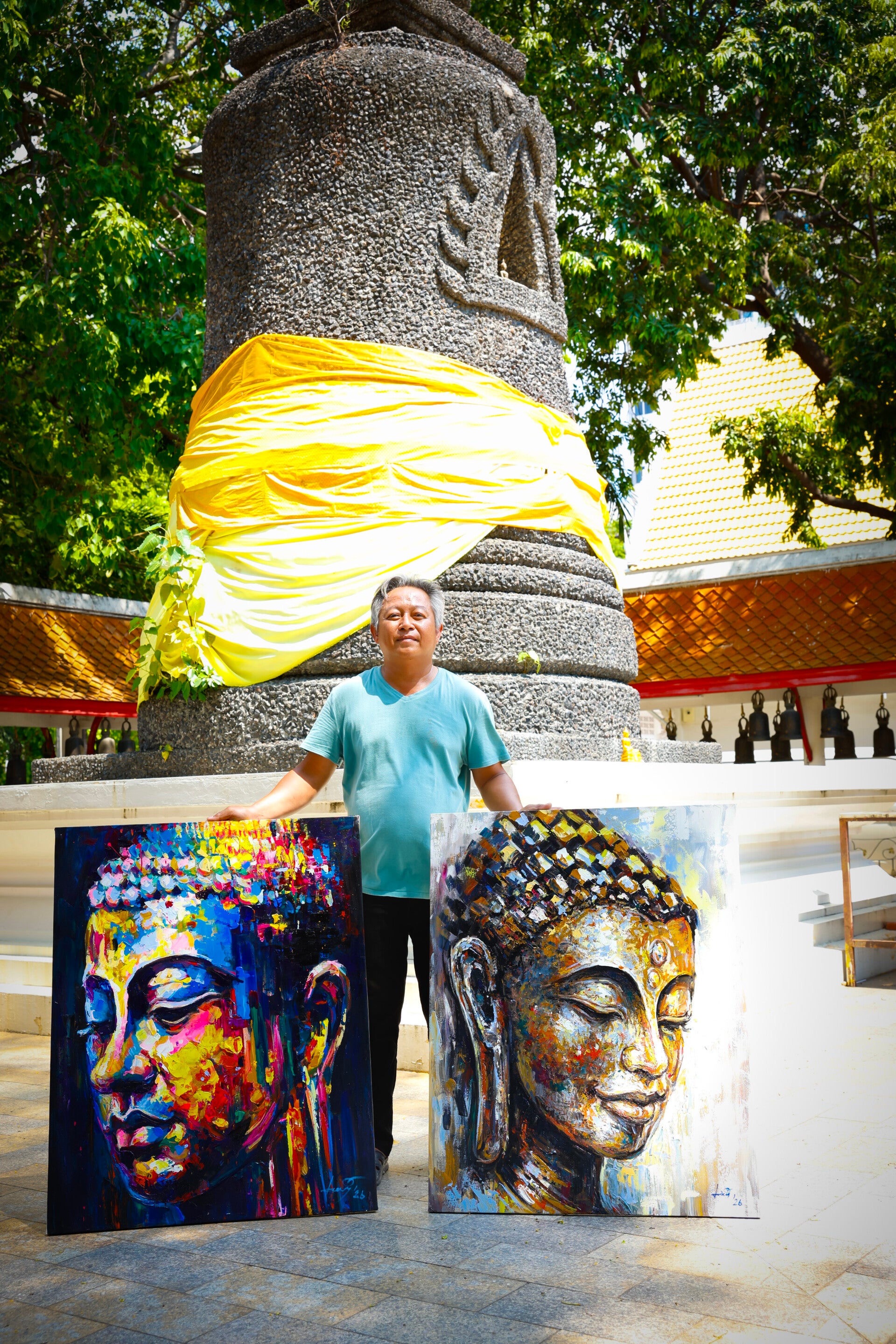
The Buddha paintings of Original Buddha Art are traditionally blessed by a monk from Wat Chai Mongkhon in Chon Buri, Thailand, approximately two hours from Bangkok. In the artist’s studio, the monk personally views the paintings before they are taken to the temple for the traditional blessing.
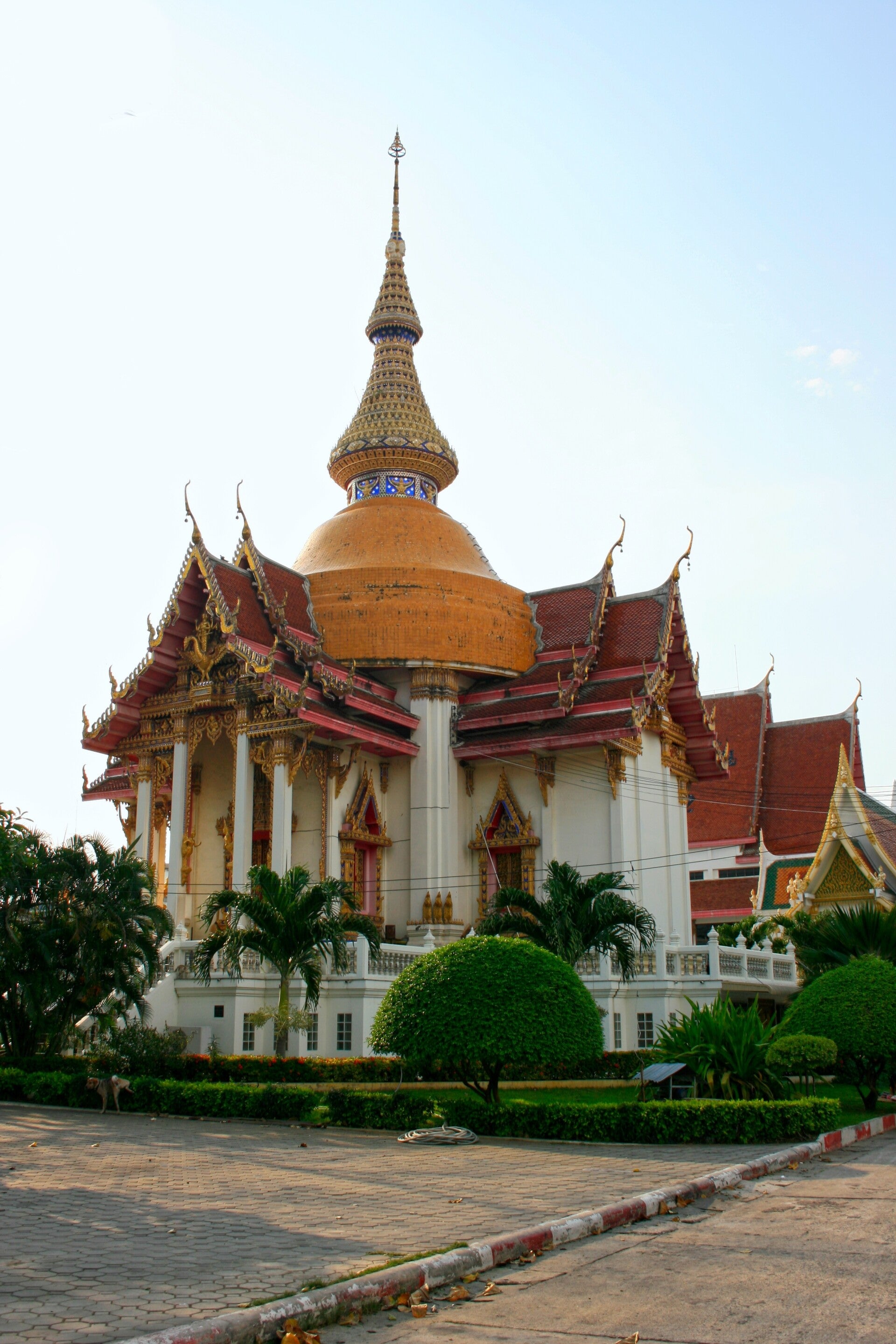
Wat Chai Mongkhon is one of the oldest and most important Buddhist temples in the coastal region of Chon Buri province. Despite its lively surroundings, the temple is seen as a place of peace, reflection and spirituality. The temple was built in the mid-19th century, during the late reign of King Rama IV.
The name Chai Mongkhon means “auspicious victory”. According to local stories, the temple owes its name to a traditional boat race that finished near this temple.
For many local residents, Wat Chai Mongkhon plays an important role in daily life. The temple is a place for:
- daily prayers and meditation
- blessings of homes, businesses and artworks
- religious ceremonies
- education and guidance by monks
- peace and reflection
During major Thai holidays, the temple often becomes a gathering place for the community. Especially during Songkran and Loy Krathong, many people visit the temple to make offerings, light candles and receive a blessing.
Why do people choose a Buddha painting?
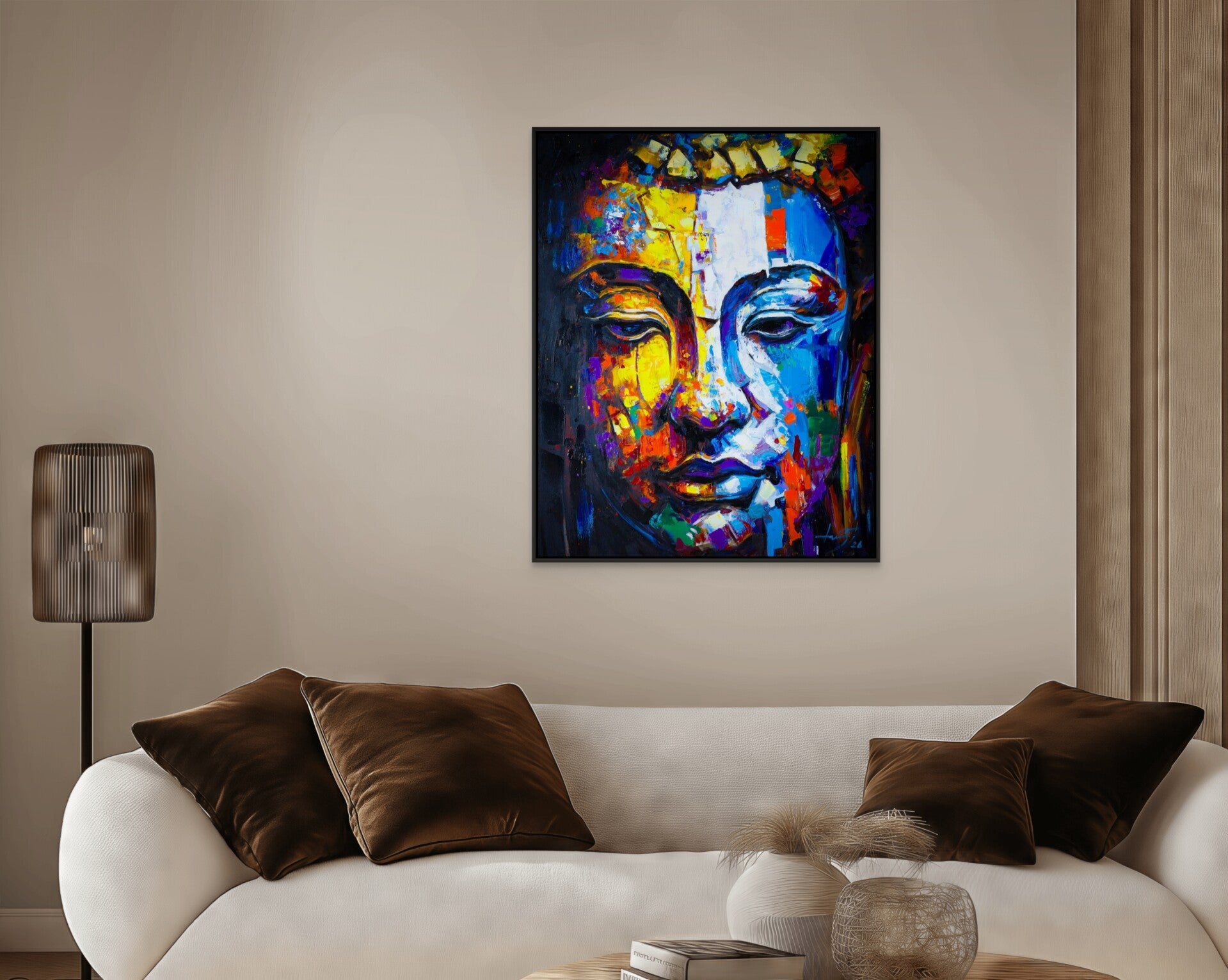
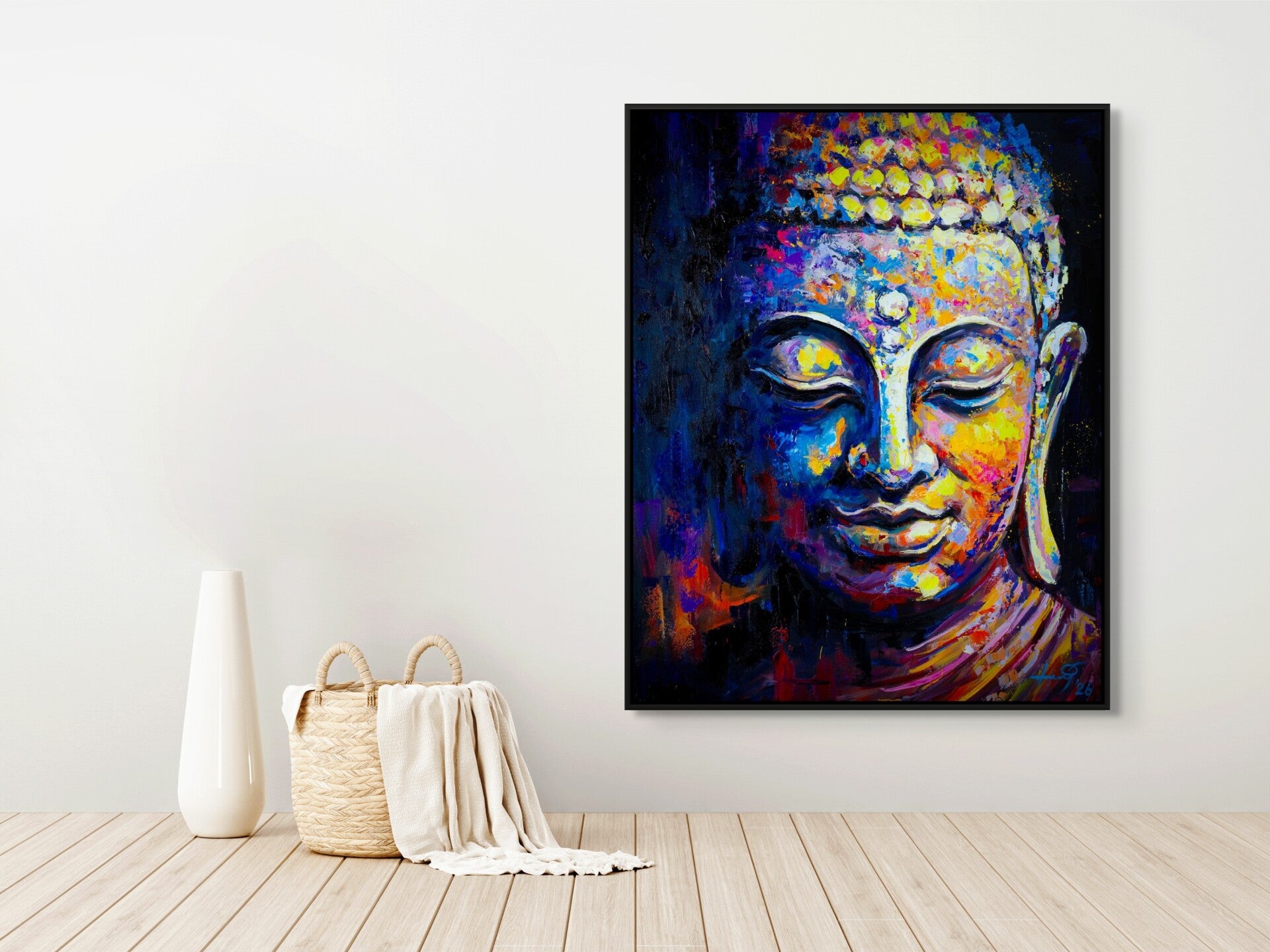
A hand-painted Buddha painting is often chosen because it is more than just wall decoration. Many people experience a Buddha painting as a source of peace, balance and inspiration in their home. Thanks to its serene appearance, warm colours and spiritual symbolism, a painting can have an immediate effect on the atmosphere of a room.
In living rooms, bedrooms, yoga spaces, therapy rooms and offices, a Buddha painting is often used as a visual point of calm. It can help make a room feel warmer, more peaceful and more balanced.
For some people, a Buddha painting mainly has a spiritual meaning. It is a reminder of meditation, mindful living and inner peace, and of letting go of stress. For others, it is a reminder of a journey through Thailand or Asia, where Buddha statues, temples and spirituality are an important part of everyday life.
In addition, many people choose a hand-painted Buddha painting because of its unique character. Unlike a print, every painting is unique and made by hand. Small details, brushstrokes and colour differences ensure that each artwork has its own appearance.
Did you know...
more than 90% of the population in Thailand
is Buddhist?
almost every Thai man at a certain
point in his life temporarily becomes a monk?
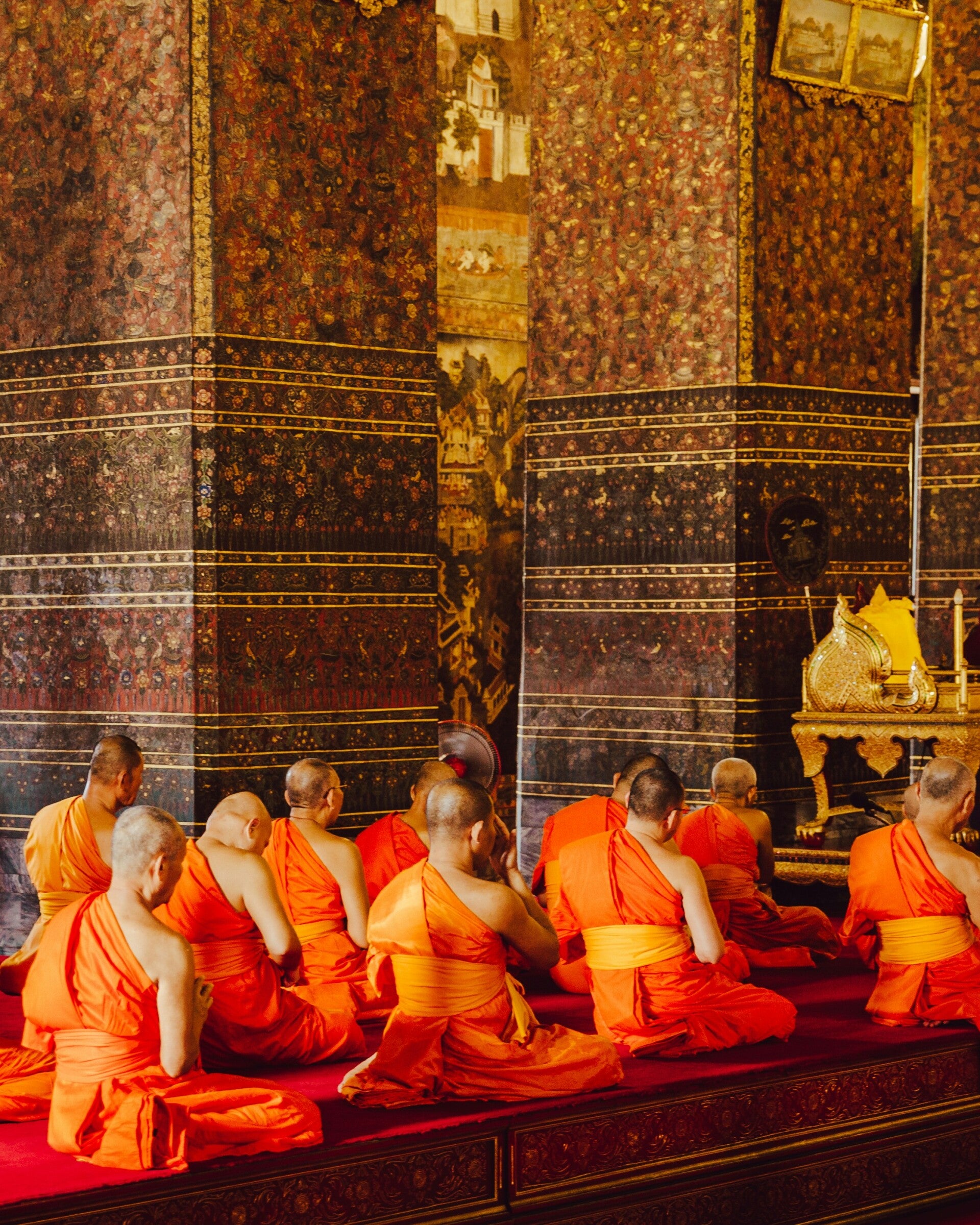
monks in Thailand regularly bless homes,
businesses and artworks?
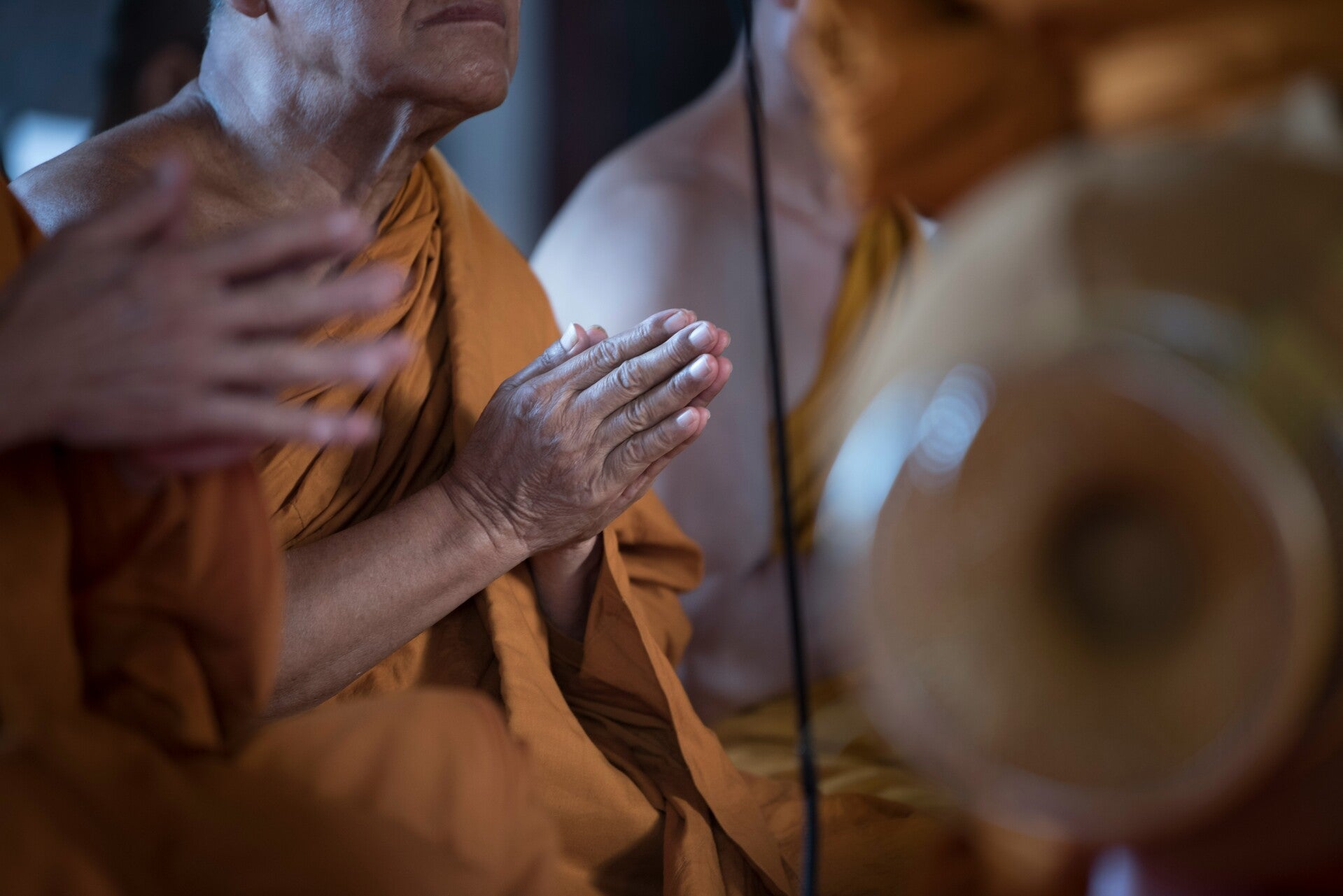
gold in Thai Buddhist art symbolises
enlightenment and spiritual wealth?
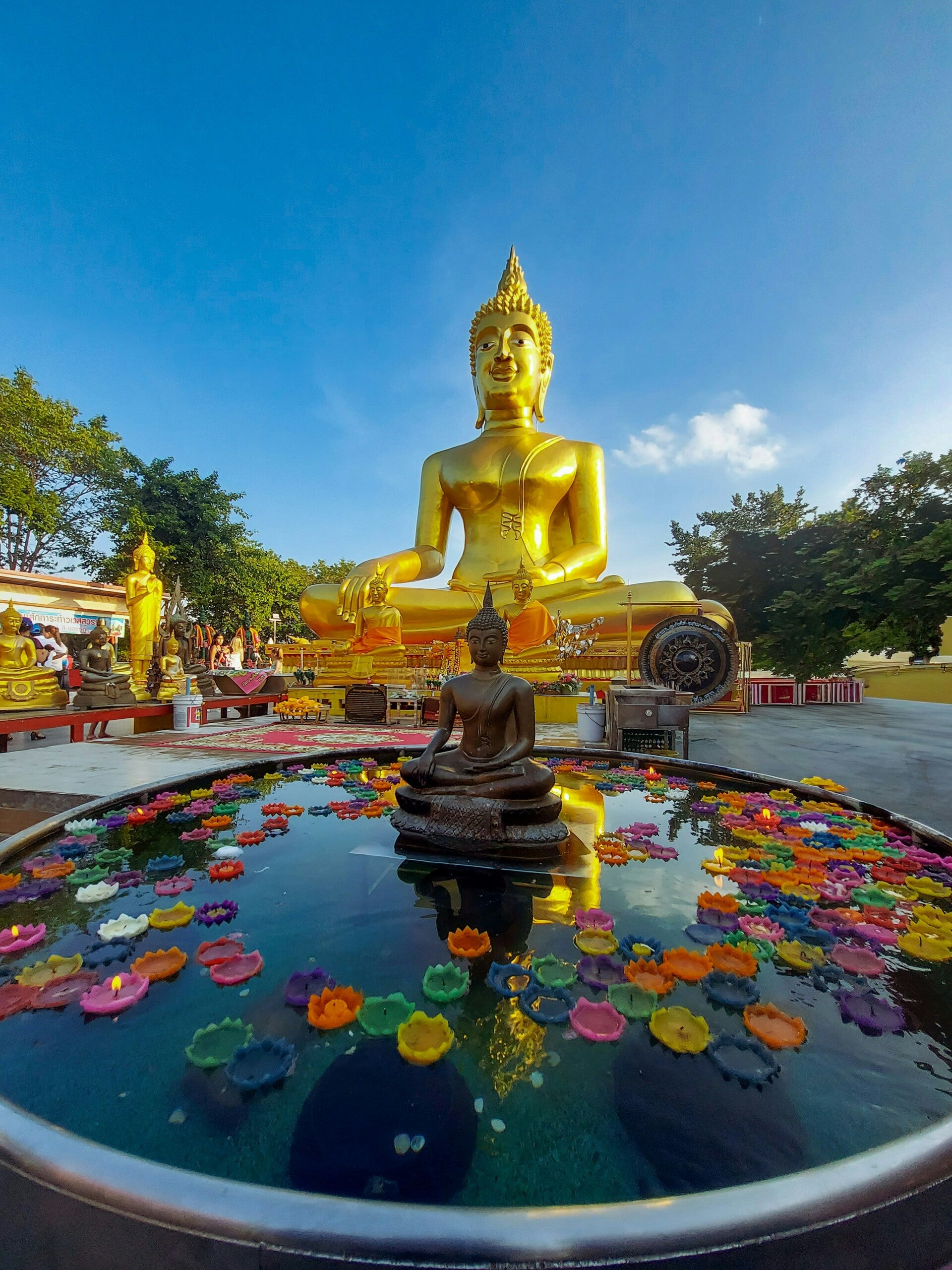
touching the head of a Buddha statue in
Thailand is considered disrespectful?
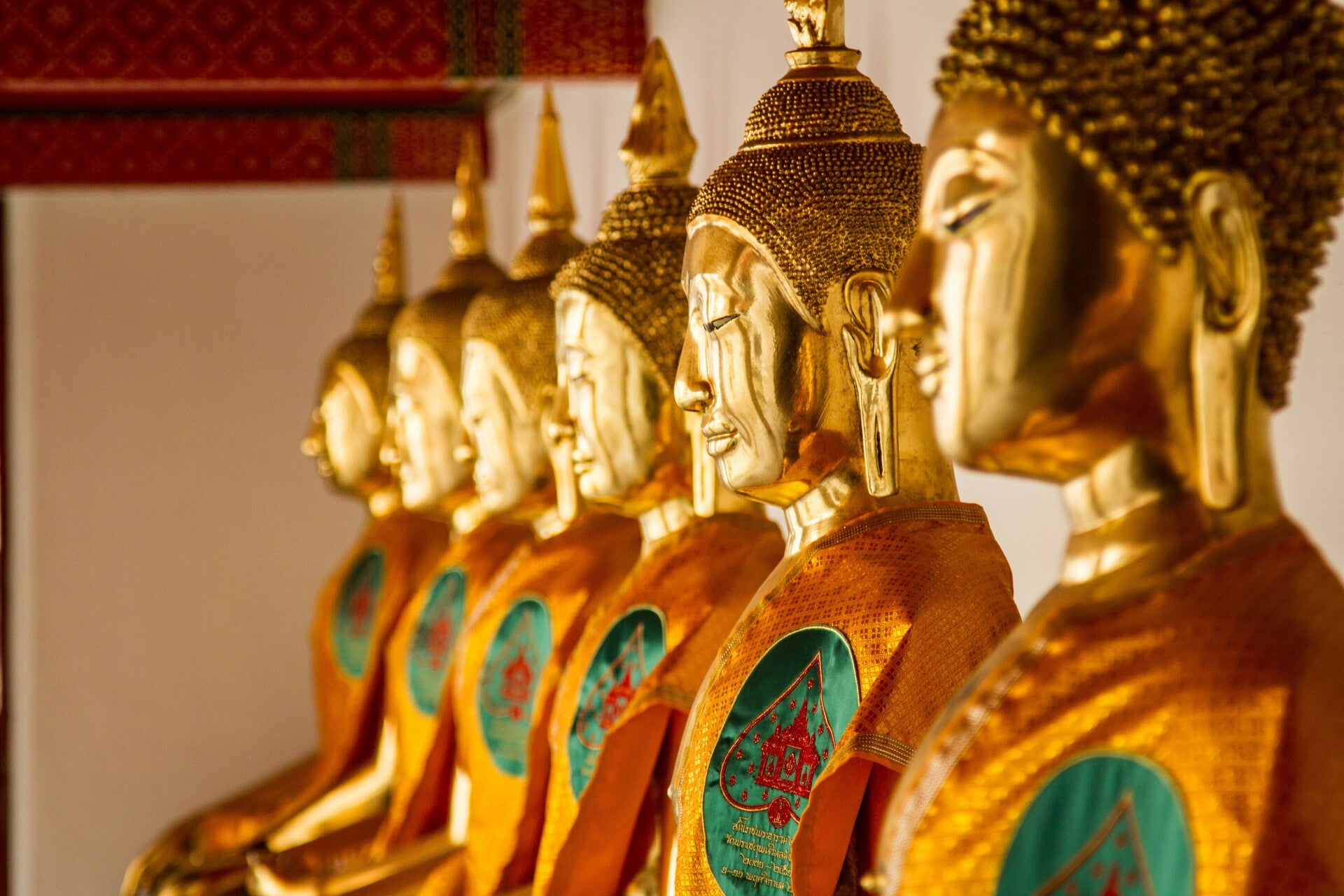
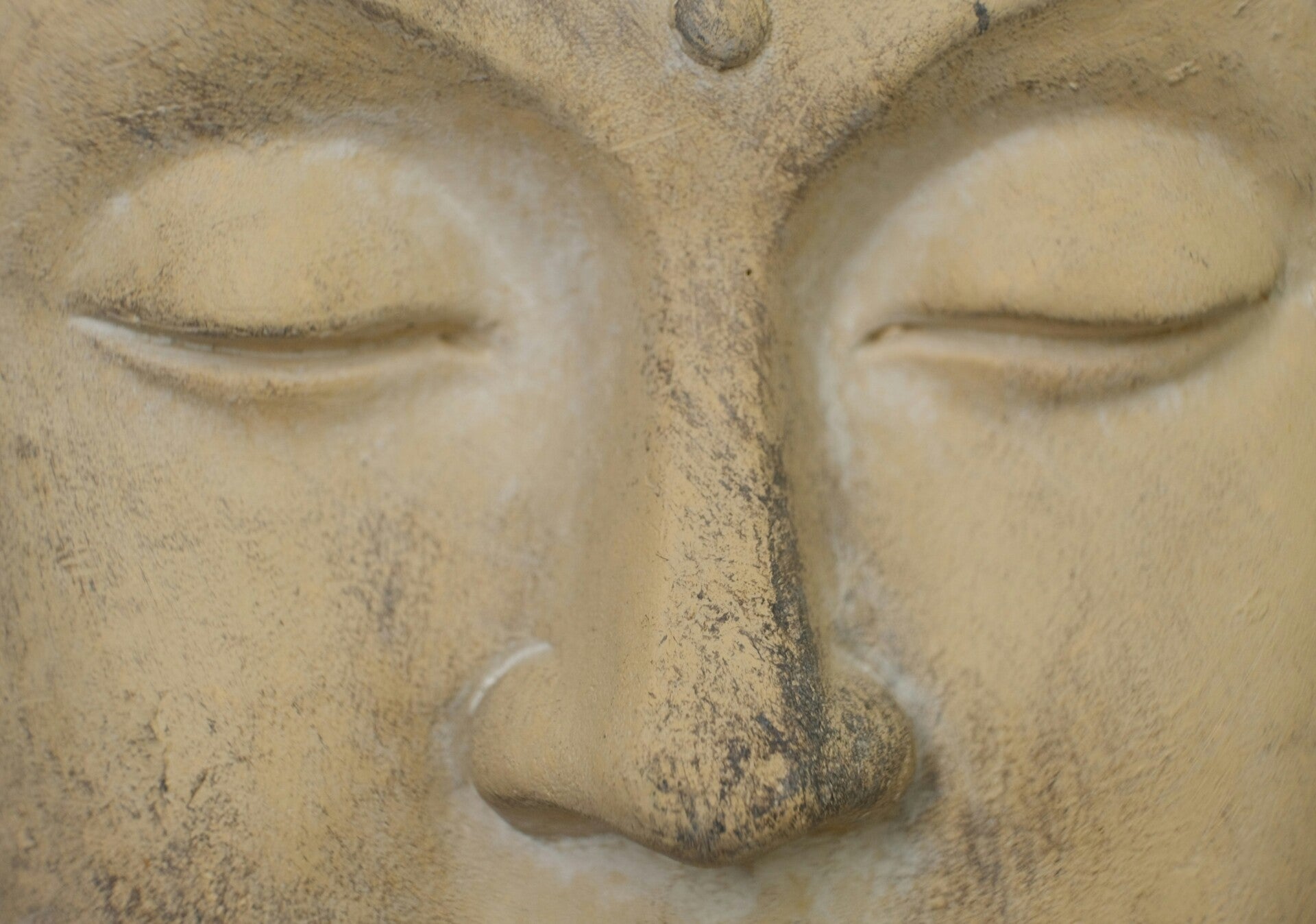
many Buddha statues have closed eyes
to represent inner peace and meditation?
The origin of Buddha art
Buddha art is used around the world as decoration, but its origins lie in ancient Buddhist traditions in which symbols, postures and facial expressions carry important meaning. In the earliest Buddhist art, Buddha himself was often not yet depicted in human form. His presence was represented through symbols such as an empty throne, footprints, a parasol, a stupa or the Bodhi tree under which he attained enlightenment. Only later did the first images of Buddha in human form appear.
Over the centuries, different countries and regions developed their own style. Thai Buddha art is known for elegant shapes, calm facial expressions and refined details. Other styles, such as those from Tibet or India, often contain more symbolism, ornaments and spiritual elements.
Within Buddhist art, not only the posture of Buddha plays an important role, but also the way the head and face are depicted. For example, closed eyes often symbolise inner peace, meditation and reflection. A gentle smile can refer to peace, harmony and contentment. The position of the head also has meaning: a slightly bowed head often radiates peace, compassion and humility, while an upright face can symbolise strength, balance and self-confidence.
Giving or receiving a Buddha as a gift
A Buddha painting or statue is often given as a gift as a symbol of peace, happiness, protection and balance. Many people choose a Buddha as a special gift for a housewarming, birthday, business opening or another special occasion.
Sometimes people say that you should not buy a Buddha for yourself and that it should be received as a gift. However, this is mainly a story that is often repeated and not an official Buddhist rule. In Thailand and other Asian countries, people also buy Buddha statues, paintings and other spiritual decorations for their own home or workplace.
The most important thing is not whether you receive a Buddha as a gift or buy one yourself, but that you treat it with respect and that it has a positive meaning for you.
More than art: a moment of peace
For many people, a blessed Buddha painting adds an extra layer of meaning: a point of calm in the home or workspace, a feeling of harmony, and a subtle reminder of inner silence and balance.