

How I thank the monk after blessing the Buddha paintings
- Date: July 2, 2026
- By: Alex Brandt
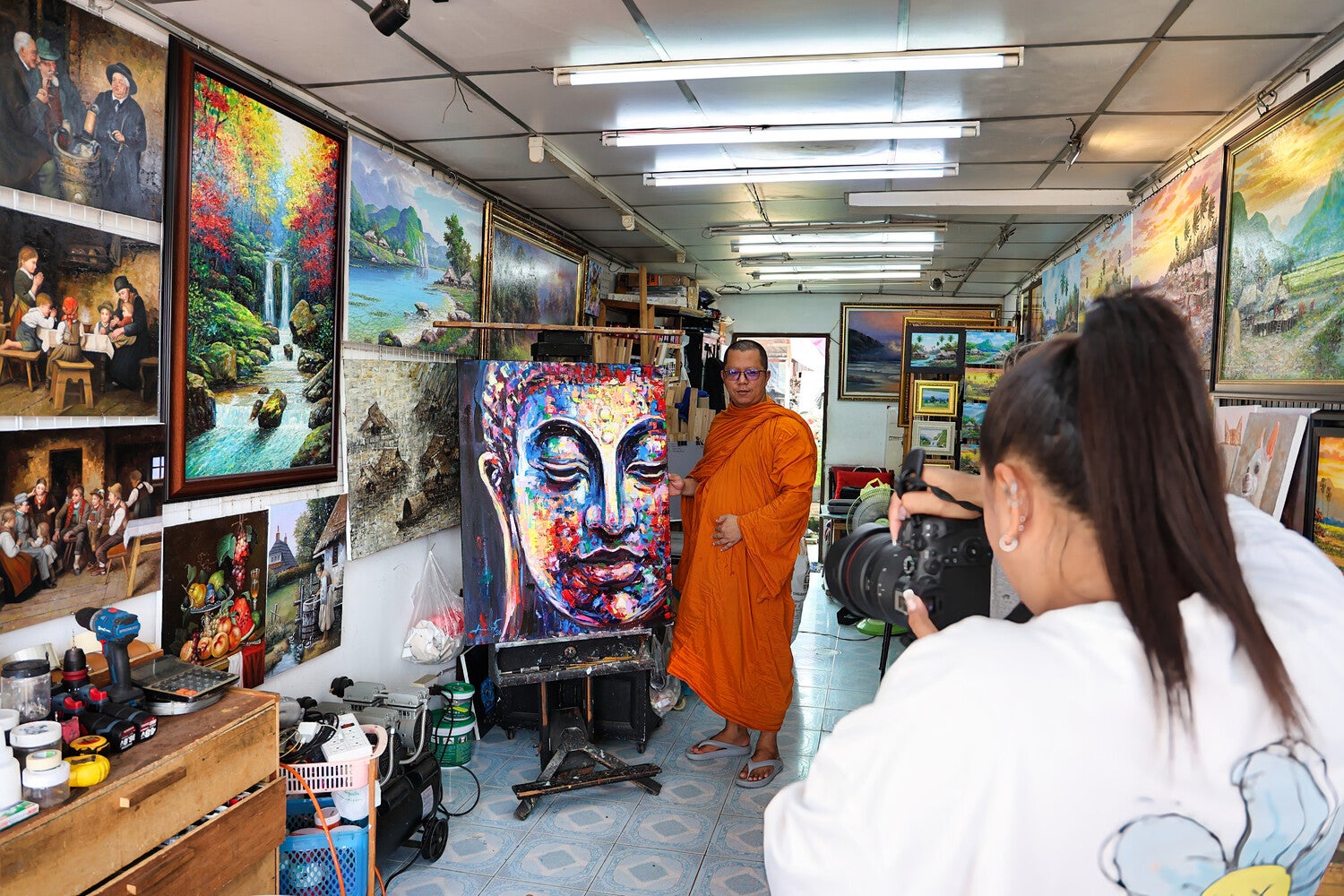
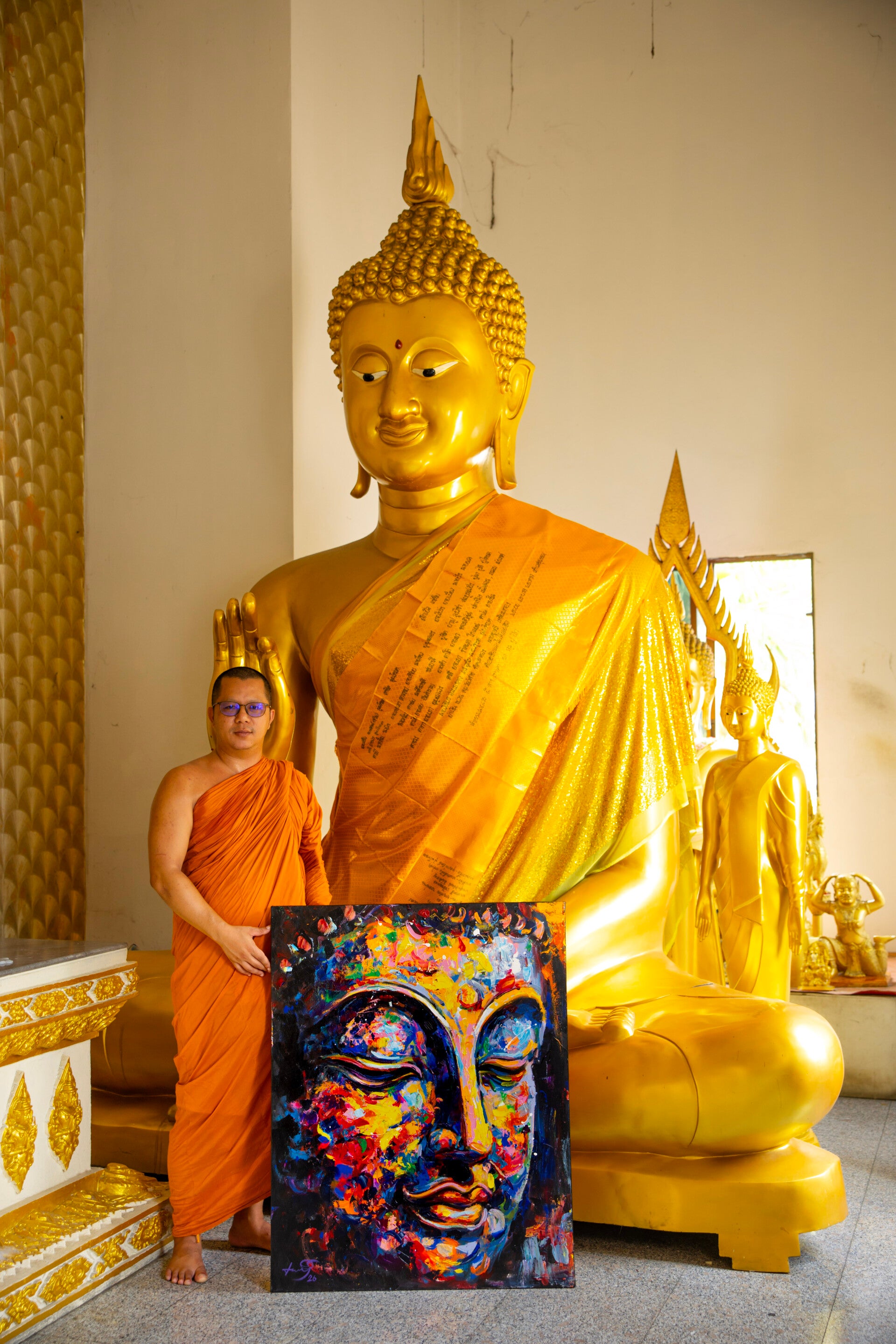
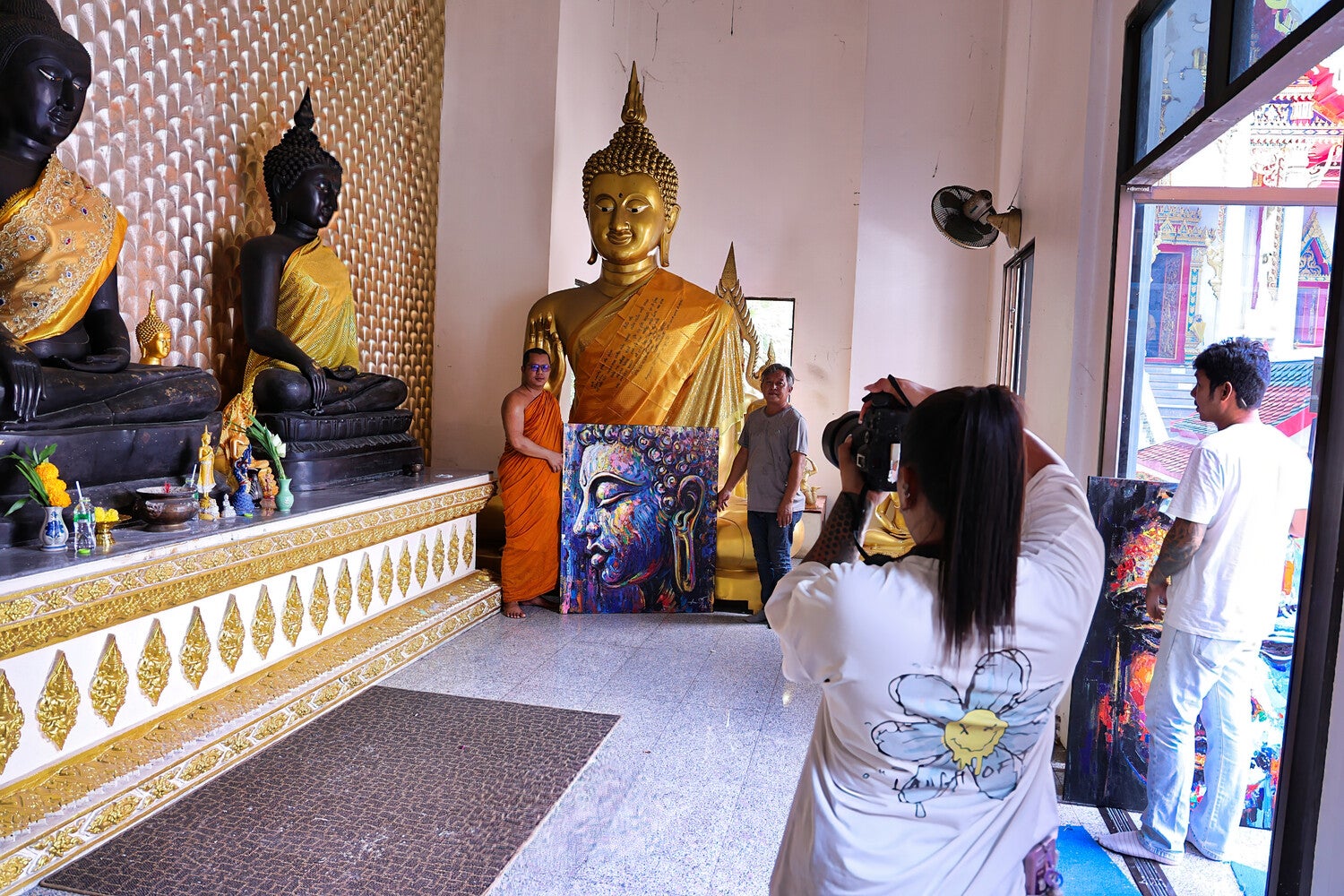
When a hand-painted Buddha painting for Original Buddha Art is completed, it is blessed by a monk in Thailand. This is a special moment that I see not only as a tradition, but also as a sign of respect for Thai culture and for the people who contribute to the story behind every single painting.
I am regularly asked whether a monk is paid for blessing the paintings. The short answer is no. A monk does not offer his blessings as a commercial service. However, it is customary to make a donation to the temple after the blessing ceremony. During my most recent visit to Thailand, I also wanted to show my appreciation in a personal way. That is why I brought a decorative tin filled with traditional Dutch stroopwafels from the Netherlands as a gift for the monk.
The special role of monks in Thailand
To understand why a blessing takes place in this way, it is important to know a little more about the role of monks in Thailand.
Thailand is predominantly Buddhist, and monks hold a special position within society. They are regarded as spiritual guides, teachers, and guardians of religious traditions that have sometimes existed for centuries. Many Thai people regularly visit a temple to pray, make a donation, attend religious ceremonies, or seek spiritual guidance.
Monks live according to extensive religious principles and dedicate their lives to study, meditation, and following the teachings of the Buddha. Their role is not limited to religious ceremonies alone. Temples also often fulfil an important social and community function. They serve as meeting places, cultural centres, and places of support for people who need help.
During my visits to Thailand, I am always struck by the great respect that monks receive from the people around them. You can see that respect reflected in countless small customs that feel completely natural to Thai people.
Why a woman was not allowed to pick up the monk on her own
For the blessing of the hand-painted Buddha paintings, the monk was picked up by my liaison in Thailand. She had organised the entire day and was responsible for bringing the monk to the artist's studio.
Interestingly, she was not allowed to pick up the monk on her own. Because she is a woman, a man also had to be present during the journey. This is related to the religious rules of conduct followed by Buddhist monks. Direct and unnecessary contact between monks and women is avoided as much as possible.
For many people in the Netherlands, this may seem unusual. However, within Thai culture, it is regarded as a way of respecting the religious discipline of the monk. For me, it was an interesting example of how traditions that are completely normal in Thailand can differ from what we are accustomed to in the Netherlands.
Did you know...
More than 93% of Thais are Buddhist?
This makes Thailand one of the most Buddhist countries in the world. Buddhism plays an important role in daily life, culture, and many traditions.
Thailand has over 44,000 temples?
According to Thailand's National Office of Buddhism, there were no fewer than 44,195 temples across the country on March 1, 2025.
Thailand has 300,000 monks?
Many Thai men also spend time temporarily as monks, often for several weeks or months, as part of an important cultural tradition.
Monks bless much more than just paintings?
In Thailand, monks bless not only paintings, but also houses, cars, businesses, boats, weddings, and many other important possessions, milestones, and life events.
Respect for the monk
During our visit to the monk's living quarters, it became clear once again how important respect within Thai culture truly is.
Before entering the monk's living quarters, my liaison in Thailand explained the customs that should be observed. Naturally, we removed our shoes before going inside. She also told me that it is customary to remain seated low to the ground or kneel when you are in the presence of a monk.
At that moment, the monk was sitting on his bed. We sat on the floor, making sure that our heads were never higher than his. Within Thai culture, this is seen as a sign of respect for the monk's position and the religious tradition he represents.
For many Westerners, these may seem like small details, but customs like these offer a unique insight into Thai culture. They show how respect is expressed through behaviour and posture.
Why a blessing is not a paid service
A monk does not ask for payment in exchange for a blessing. Within Buddhism, a blessing is regarded as a religious act rather than a commercial service.
However, this does not mean that a temple does not need financial support. That is why it is customary in Thailand to make a voluntary donation to the temple. This contribution is not considered payment for the blessing, but rather a way to support the temple and its activities.
View the blessed paintings
Behind every painting is a unique story. Discover the current collection of blessed, hand-painted Buddha paintings from Thailand.
What are donations used for?
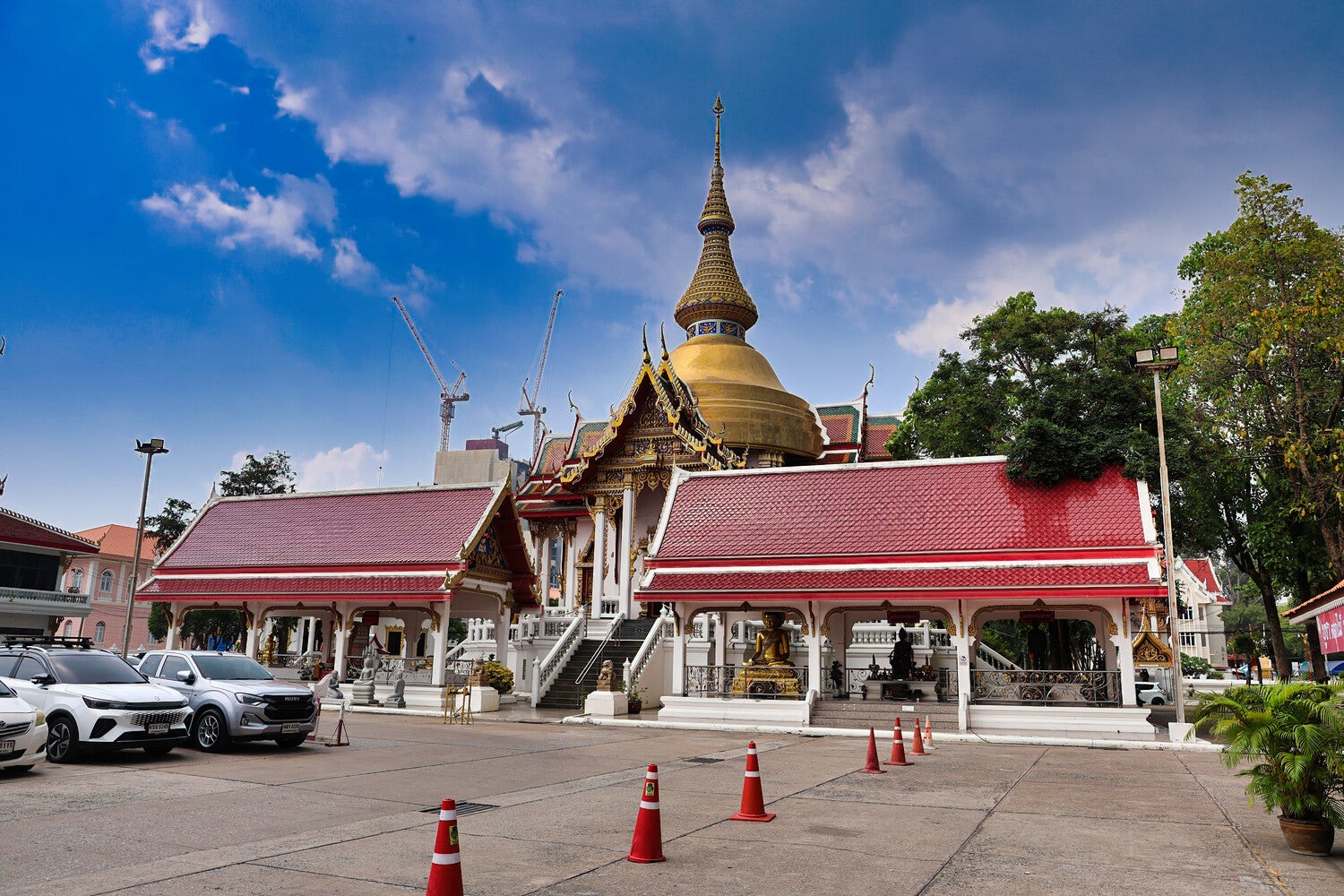
The donations received by temples are often used for the maintenance of buildings, religious ceremonies, and educational activities. They also help cover the daily expenses needed to keep the temple running.
In addition, many temples support their local communities. In Thailand, temples are often much more than just places of worship. They are an important part of community life and play a role in cultural events, education, and charitable activities.
Whenever I have a painting blessed, I make a voluntary donation to the temple on behalf of Original Buddha Art. In this way, I help preserve a tradition that holds great meaning for many Thai people.
A tin of stroopwafels from the Netherlands
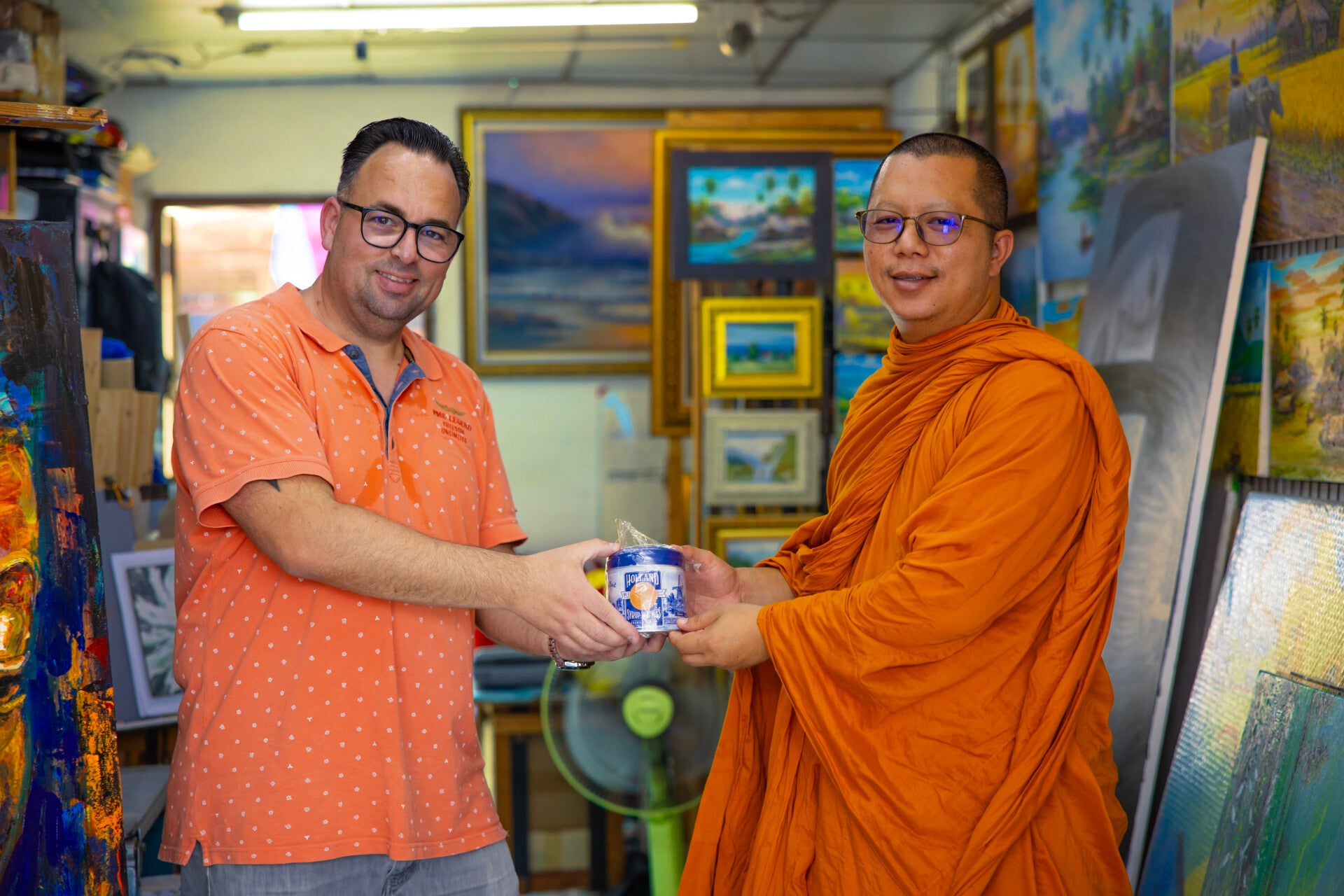
During my most recent visit, I wanted to bring a personal gift in addition to the usual donation. That is why I brought a decorative tin filled with Dutch stroopwafels from the Netherlands.
It was a simple gesture, but that was exactly what made it so meaningful. A traditional Dutch treat as a thank-you gift for a Thai monk symbolised the connection between the Netherlands and Thailand for me.
The stroopwafels were received with a warm smile and created a memorable moment during a day that was already very special.
More than a ritual
For me, blessing the Buddha paintings is much more than a ceremonial moment before a painting is shipped to the Netherlands.
It is an opportunity to meet people who play an important role in Thai society. It is a reminder of the respect that is often visible in everyday life in Thailand. And it is a way to reflect on the traditions and values that lie behind every painting.
The donation to the temple, the respect shown to the monk, and even a simple tin of stroopwafels are all part of that story.
These are the moments that make every painting more than just paint and canvas. They also carry a piece of Thai culture, Buddhist tradition, and human connection.
"Sometimes the greatest meaning lies not in what you receive, but in the appreciation you show."
More blogs from Original Buddha Art

The Beginning of Original Buddha Art
In this blog you will read how Original Buddha Art began after a meeting with Thai artist Seksak Jaichumchen and his Buddha paintings from Thailand.

The blessing of Buddha paintings
In this blog, you will learn why Buddha paintings in Thailand are blessed by a monk and the spiritual meaning behind this tradition.

Buying a Buddha Painting as a Non-Buddhist
In this blog, you'll discover whether you can buy a Buddha painting as a non-Buddhist and why the symbolism of peace, balance, and positivity resonates worldwide.