

What does a laughing Buddha mean? And how is it different from authentic Buddha art?
- Date: May 28, 2026
- By: Alex Brandt
Many people search for a laughing Buddha.
A figure that represents happiness and positivity and brings a good energy into the home.
But what many people don’t realize is that the “laughing Buddha” you often see is actually not the same Buddha as the one depicted in traditional Buddha paintings.
In this article, we explain what a laughing Buddha really means — and how to recognize the difference between outer cheerfulness and inner calm.
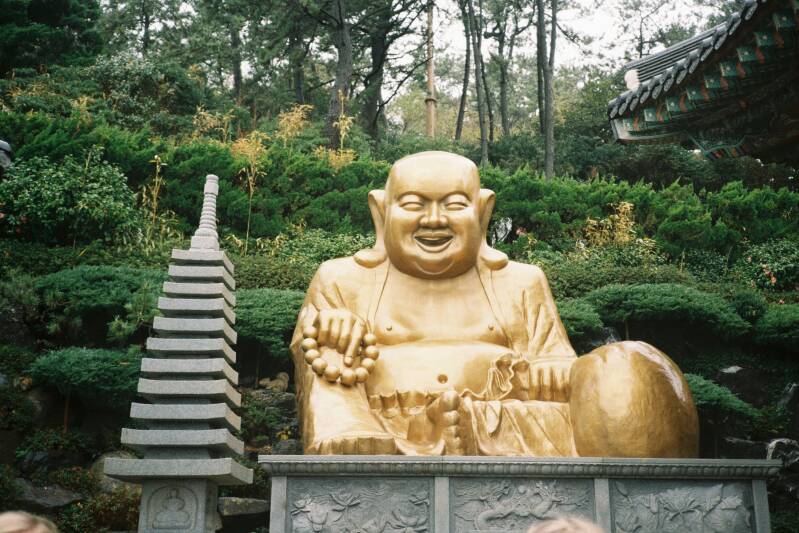
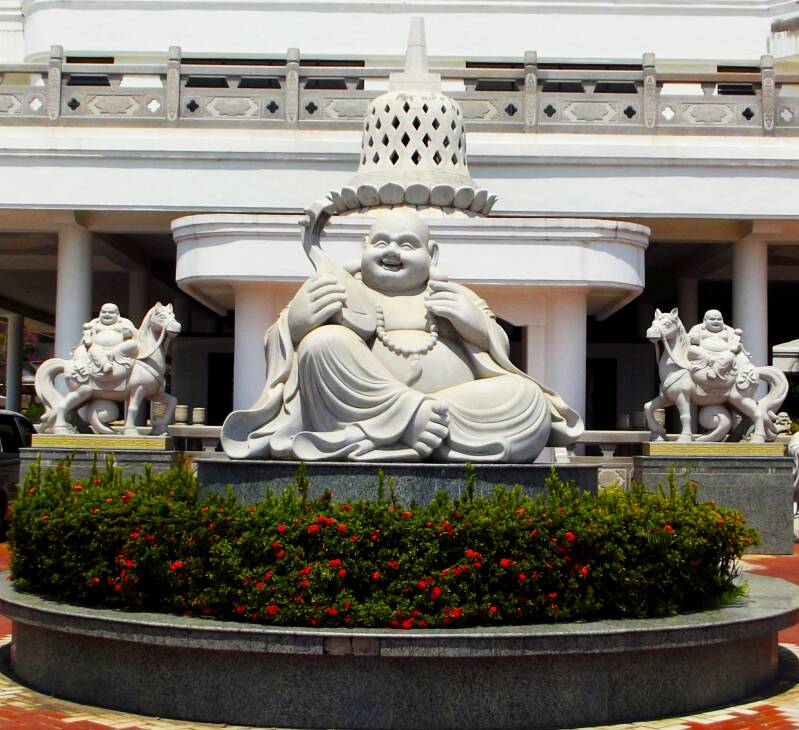
The laughing Buddha: who is he really?
The well-known “laughing Buddha” often seen in shops and interior decoration is based on Budai (Hotei), a Chinese monk from the 10th century.
Characteristics:
- round belly
- wide smile
- open and expressive appearance
- symbol of happiness, abundance, and prosperity
This figure therefore has mainly a folkloric and symbolic meaning and does not originate from the original teachings of the Buddha.
The Buddha in traditional art
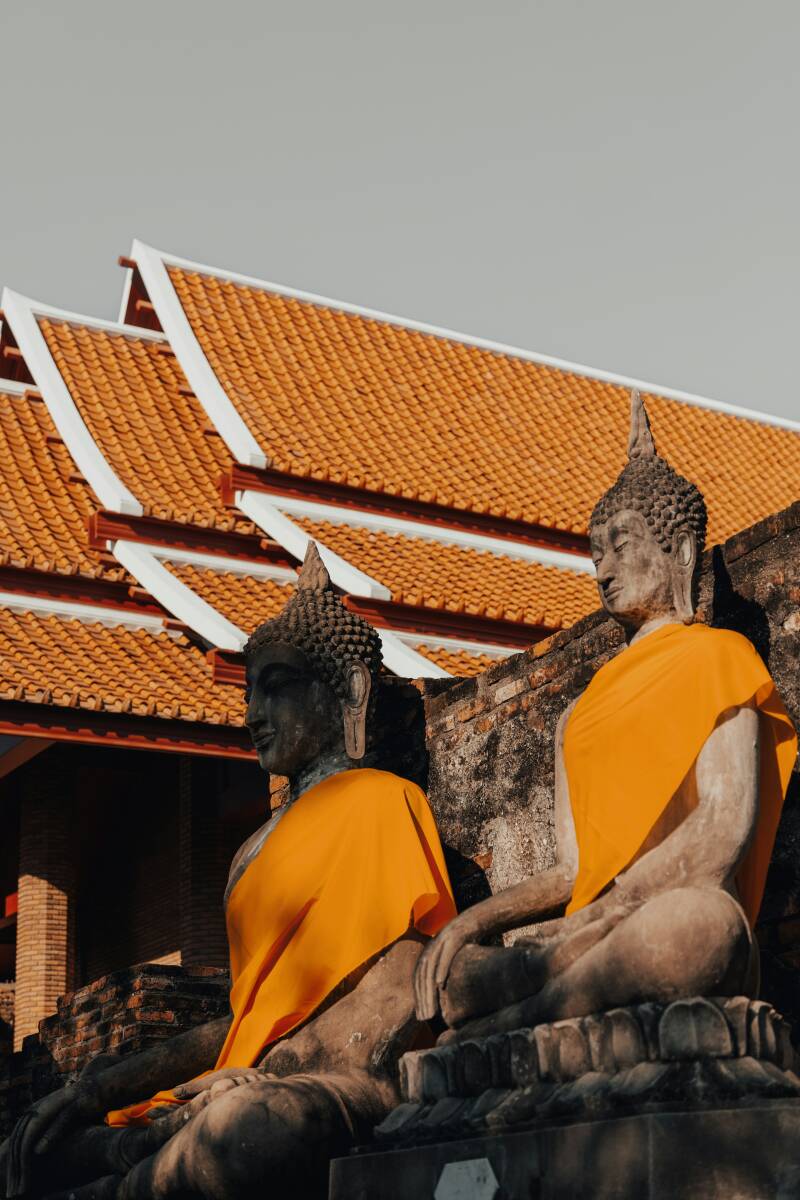
The Buddha you see in authentic paintings and sculptures is Siddhartha Gautama — the historical Buddha.
And there, you notice something very different:
- closed or half-closed eyes
- a relaxed facial expression
- no exuberant smile
- a subtle, almost invisible smile
This smile does not represent outward joy, but inner calm, balance, and enlightenment.
The true meaning of a “laughing Buddha”
What many people mean by a “laughing Buddha” is actually:
- a sense of calm
- positive energy
- a peaceful, harmonious presence
And this is exactly what you see reflected in traditional Buddha art — but in a much more subtle way. Not as a big smile… but as an inner smile.
How do you recognize this in Buddha paintings?
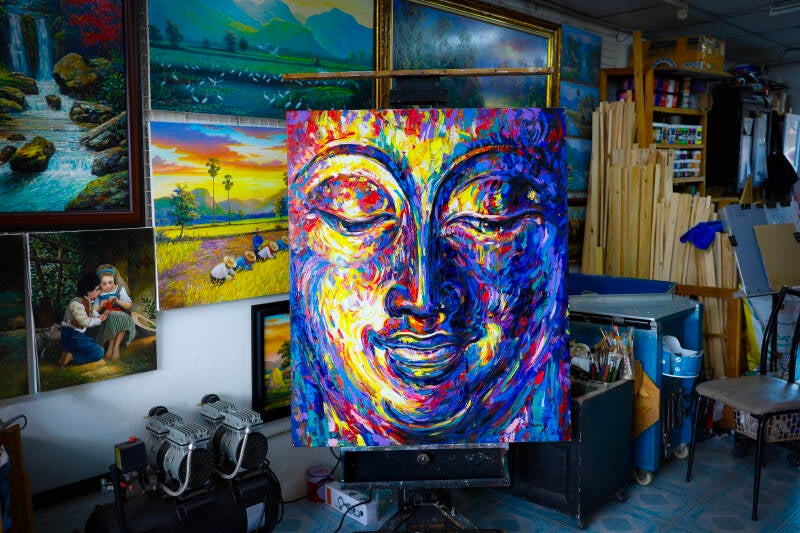
In hand-painted Buddha art, you can recognize this “inner smile” through subtle details:
- slightly upturned corners of the mouth
- relaxed jaw
- soft facial expression
- closed eyes → turned inward
This combination creates a feeling of:
- calm
- serenity
- presence in the moment
Examples from our collection
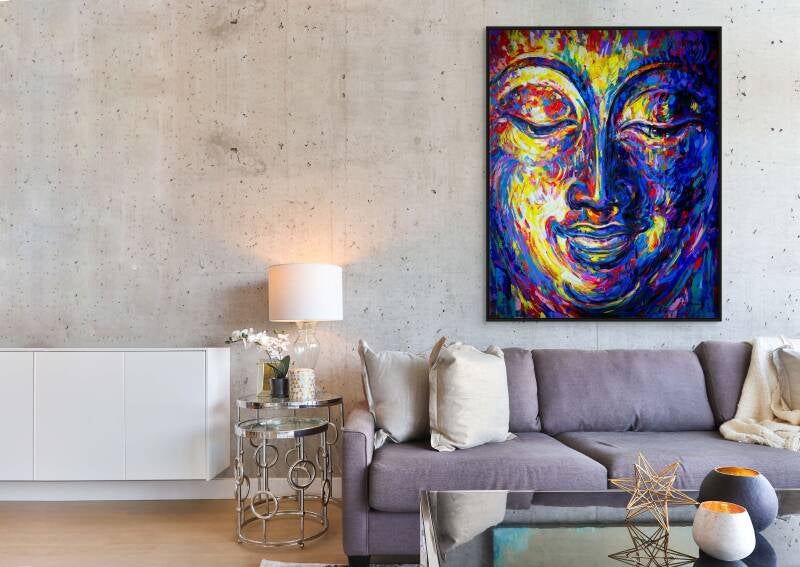
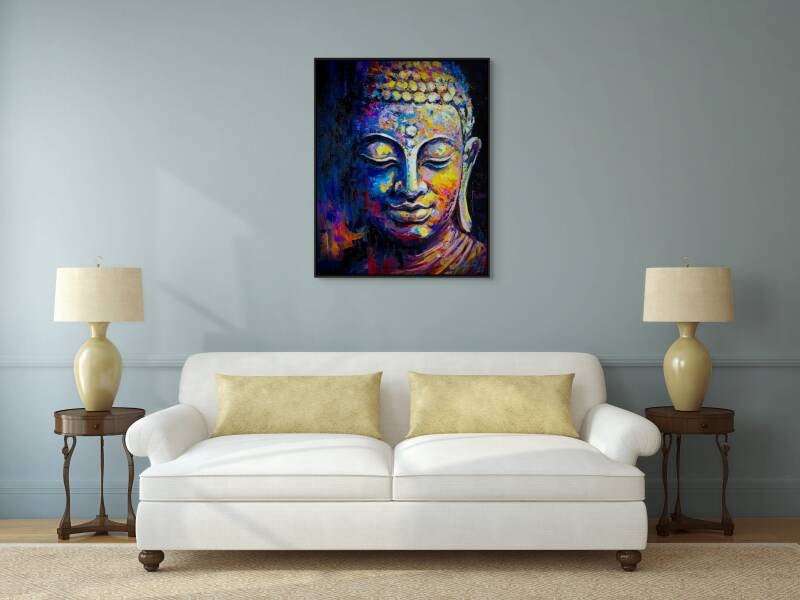
Within the collection of Original Buddha Art, you can clearly see this reflected in the paintings below. This is what many people are looking for when they think of a “laughing Buddha” — but in a refined, authentic form.
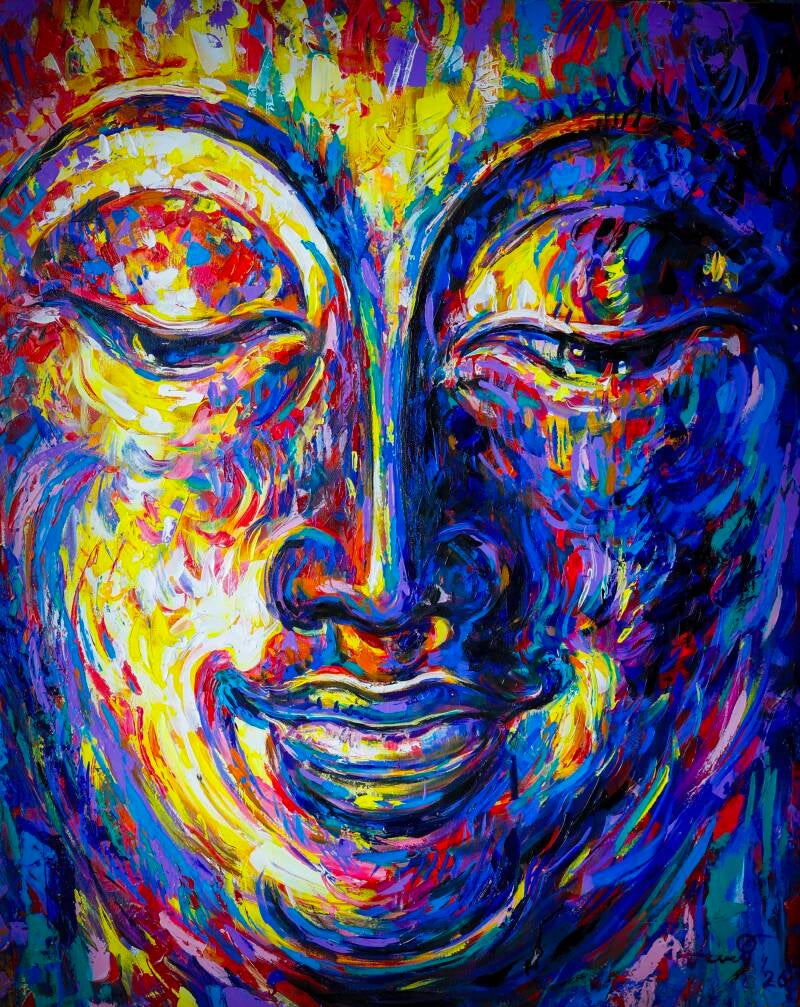
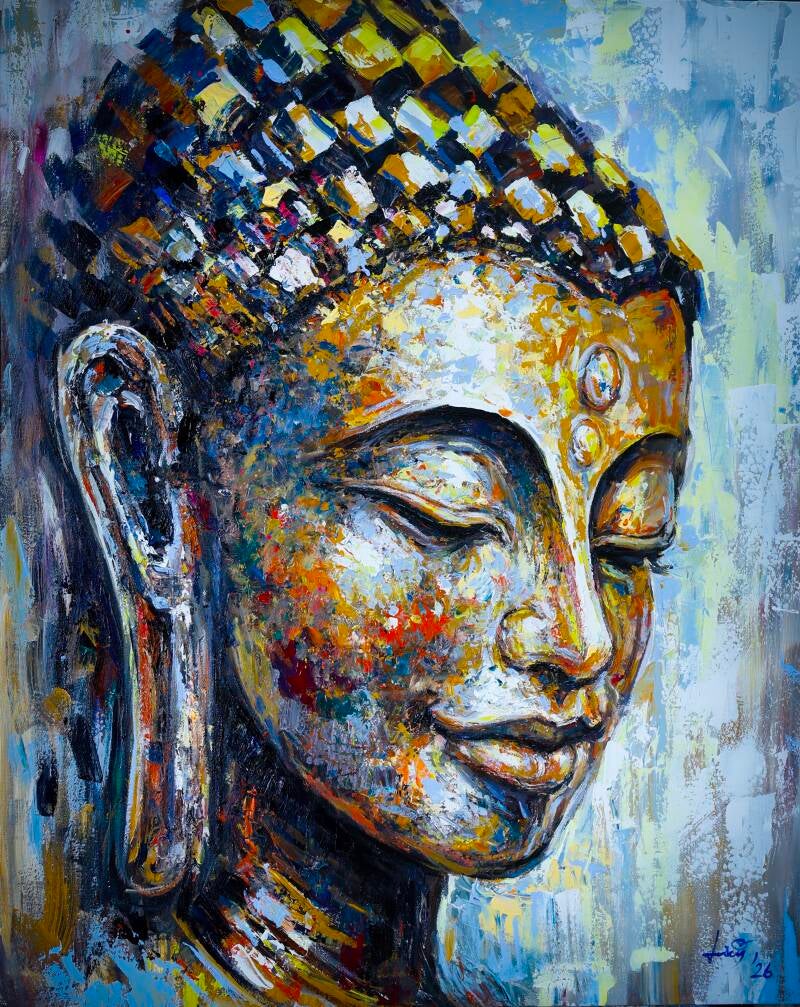
Golden Serenity
👉 subtle relaxation in the face
👉 warm colors enhance a sense of calm and balance
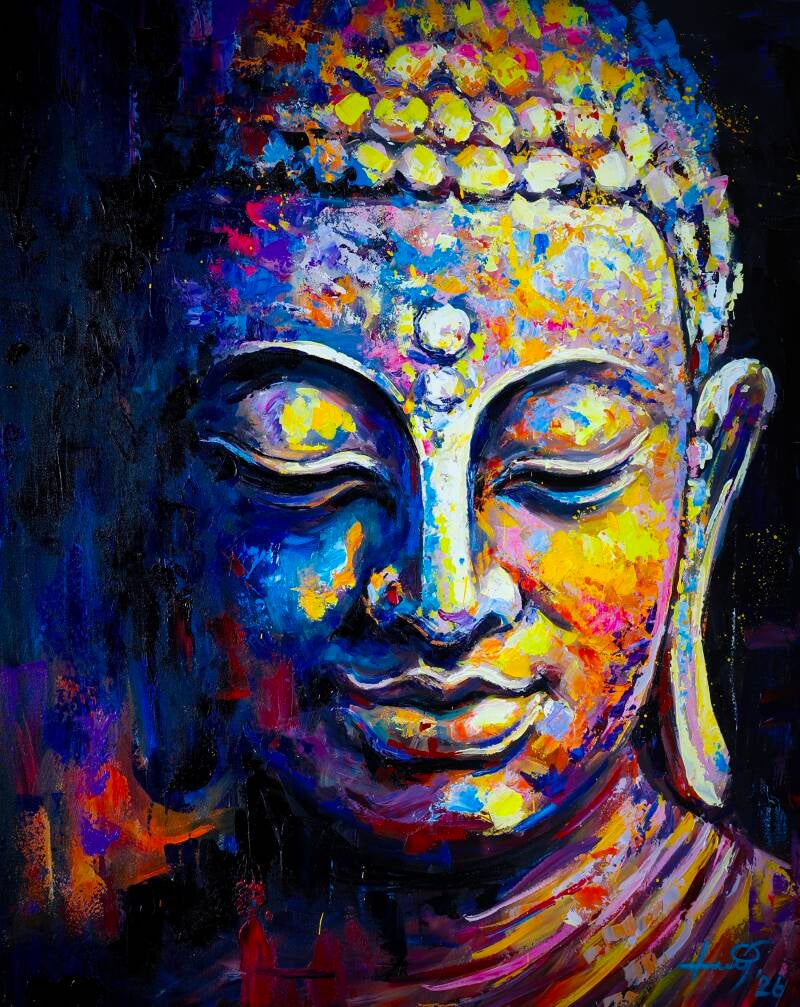
Peace Within
👉 calm, soft expression
👉 a perfect reflection of stillness and inner peace
What should you pay attention to?
Many “laughing Buddha” decorations you see online are:
❌ mass-produced
❌ lacking cultural context
❌ often purely decorative
If you are looking for something with real meaning, pay attention to:
✔ hand-painted
✔ authentic origin
✔ clear background of the artist
✔ respectful representation of the Buddha
Checklist: how to recognize an authentic Buddha painting
Use this checklist when considering a Buddha painting:
- is it hand-painted (not a print or mass-produced)?
- is the origin transparent (studio, artist)?
- does it include a certificate of authenticity?
- is it officially imported?
- is it professionally stretched and finished in the Netherlands?
- can you choose a high-quality frame (floating frame)?
These are exactly the elements that make the difference between decoration and art with meaning.
Discover your Buddha painting
An artwork that goes beyond decoration.
Find the unique painting that adds calm, balance, and meaning to your space.
What suits your interior?
Where a laughing Buddha is often a bold statement, traditional Buddha paintings bring:
- calm to the space
- balance to the interior
- a timeless presence
They are therefore perfect for:
- living rooms
- bedrooms
- yoga spaces
- practice rooms
Conclusion
The “laughing Buddha” is a powerful symbol of happiness and abundance.
But in traditional Buddha art, it is about something else:
- not an exuberant smile
- but an inner smile
A silence you can feel.
A calm you can see.
And that is exactly what makes an authentic Buddha painting so special.
“The Buddha does not laugh at the world — he smiles from inner calm.”
More blogs from Original Buddha Art

The Beginning of Original Buddha Art
In this blog you will read how Original Buddha Art began after a meeting with Thai artist Seksak Jaichumchen and his Buddha paintings from Thailand.

The blessing of Buddha paintings
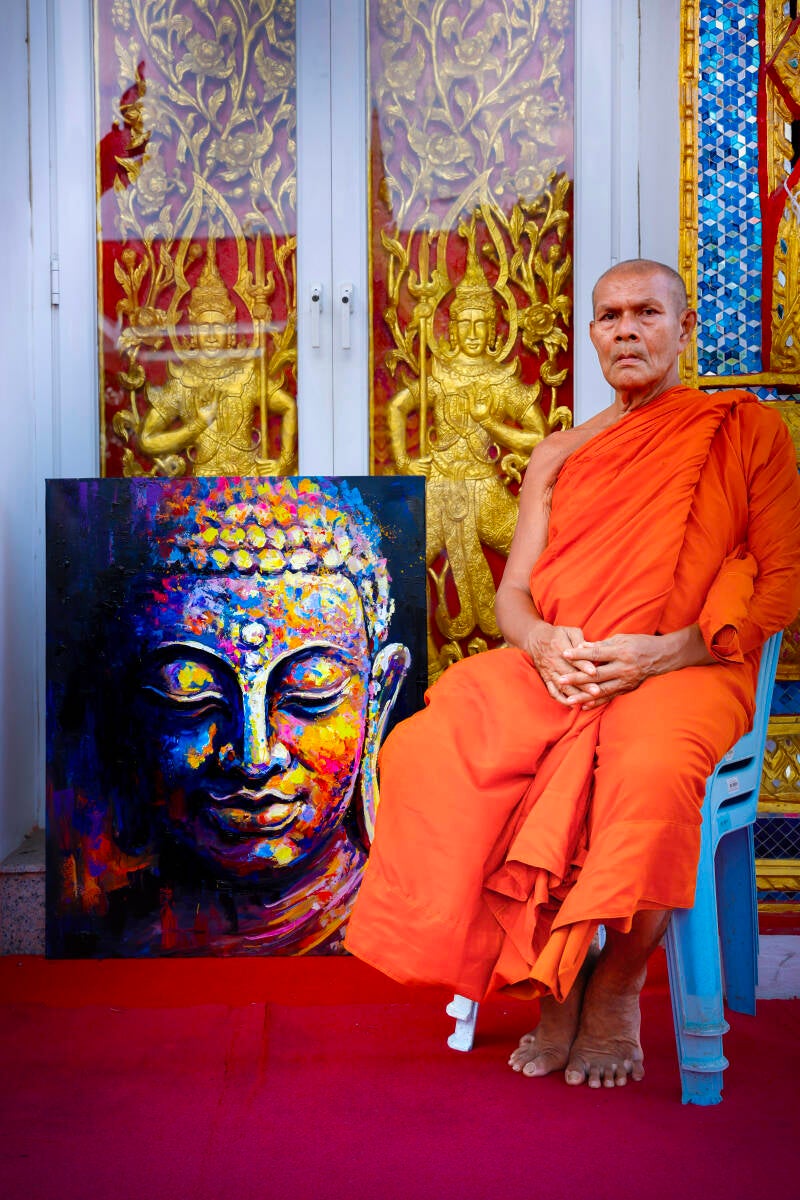
In this blog, you will learn why Buddha paintings in Thailand are blessed by a monk and the spiritual meaning behind this tradition.

Where do you place a Buddha painting?
In this blog, you will discover the best place to hang a Buddha painting according to Buddhist traditions and the symbolic meaning of respect, peace, and harmony.

Meaning of Buddha paintings in your home
In this blog, you will read about the meaning of a Buddha painting and why Buddha art is often chosen to bring peace, balance, and harmony into an interior.

Is it appropriate to have a Buddha at home?
In this blog, you will learn whether it is appropriate to have a Buddha image at home, how this is viewed in Thailand, and what Buddha art can represent in a living space.

What to consider when buying a Buddha painting?
In this blog, you will discover what to look for when choosing or buying a Buddha painting, from appearance and size to the meaning and origin of the artwork.

Buddha painting living room: tips & inspiration
In this blog, we share practical tips, inspiration, and examples to help you choose the perfect Buddha painting for your living room.

Buddha painting postures – meaning & buying guide
In this blog, you will learn the meaning of different Buddha painting postures and how to choose the right artwork that fits your interior and personal feeling.

Hand-painted or printed Buddha painting?
In this blog, you will learn what the difference is between a hand-painted and printed Buddha painting, and discover which choice best suits quality, appearance, and meaning.

Can you buy a Buddha painting for yourself?
In this blog, you will learn where the idea comes from that you should receive a Buddha as a gift, and discover why you can also buy one yourself.

What does a Buddha painting cost?
In this blog, you will learn what a Buddha painting costs, which factors determine the price, and why hand-painted, authentic art often has a higher value than prints.

Where to buy an authentic Buddha painting?
In this blog, you will learn where to buy a truly hand-painted Buddha painting and what to look for to recognize quality, authenticity, and visual appeal.